
Last updated August 25, 2026
Free on-site gate assessment - hinges, posts, and your LiftMaster or Nice gate operator checked before anything is quoted
The assessment is free and the quote is the invoice.
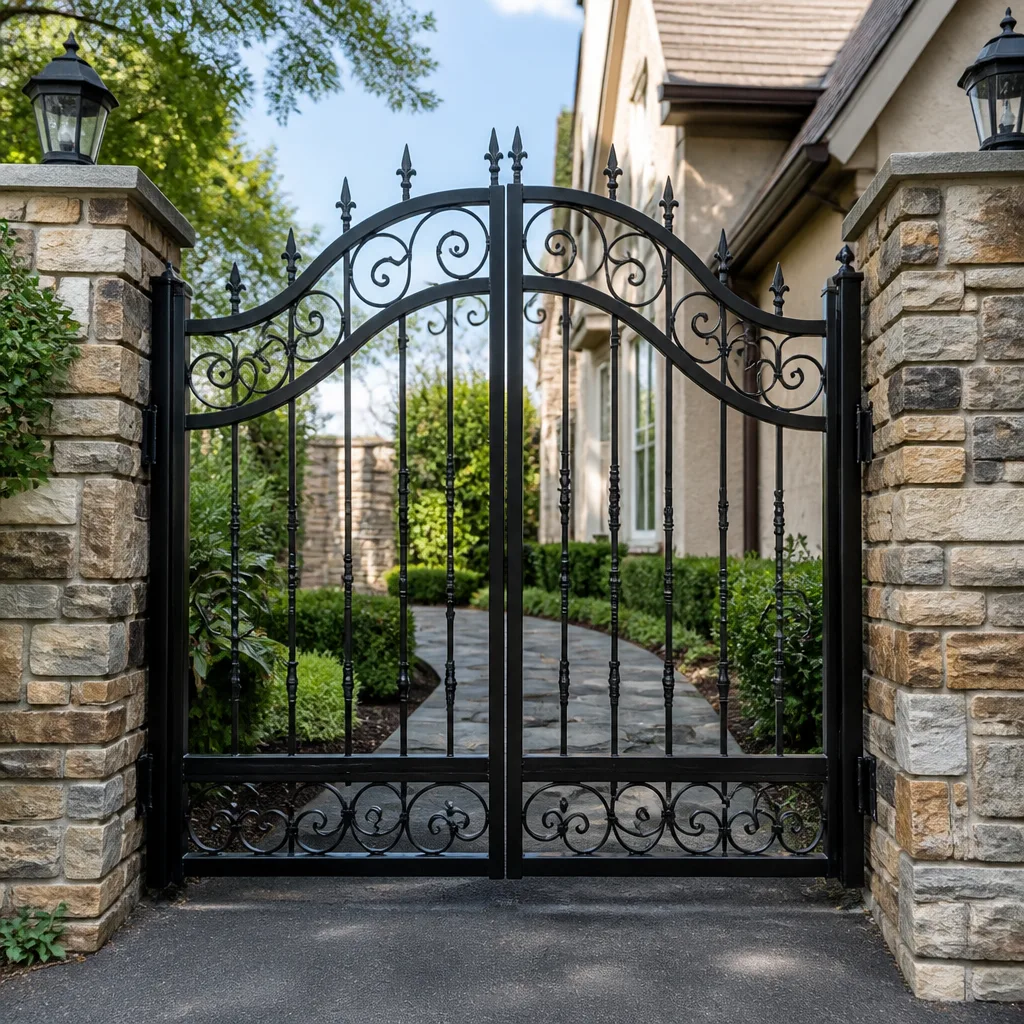
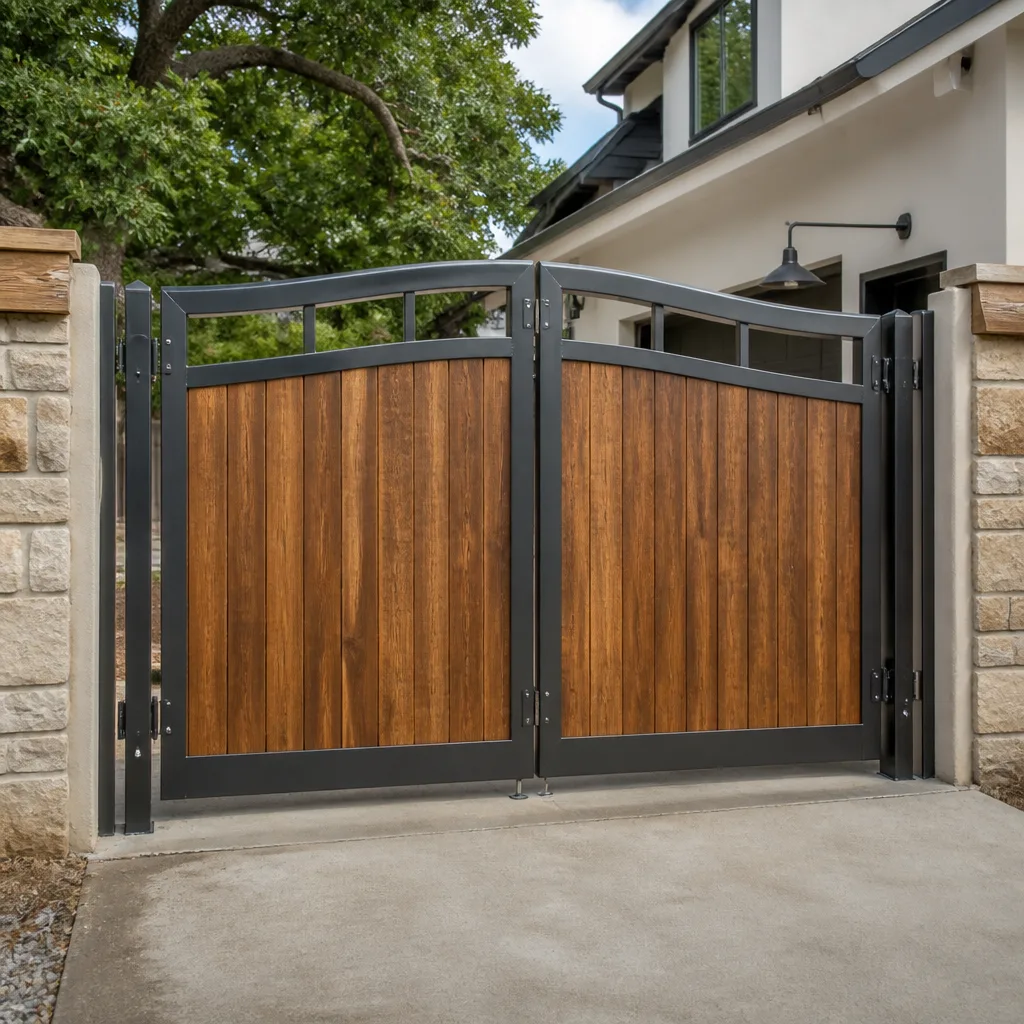
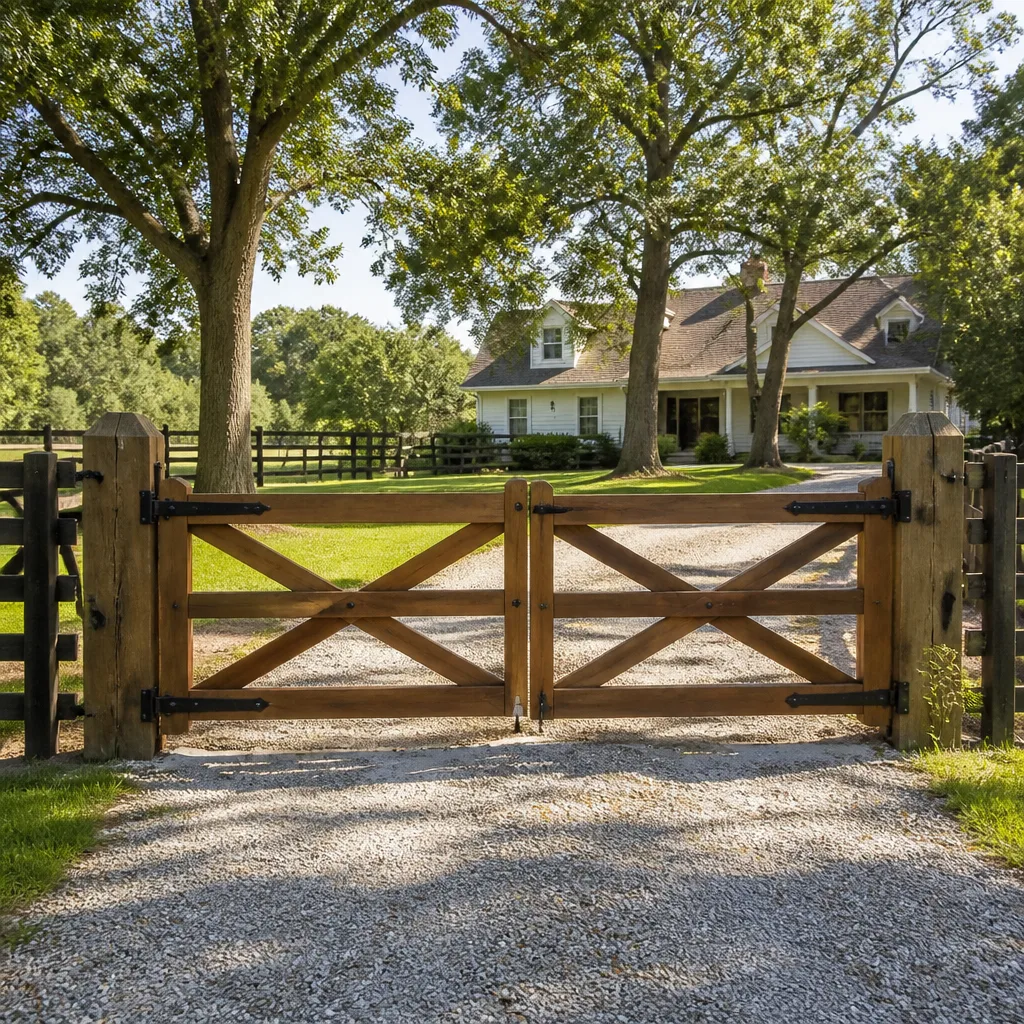
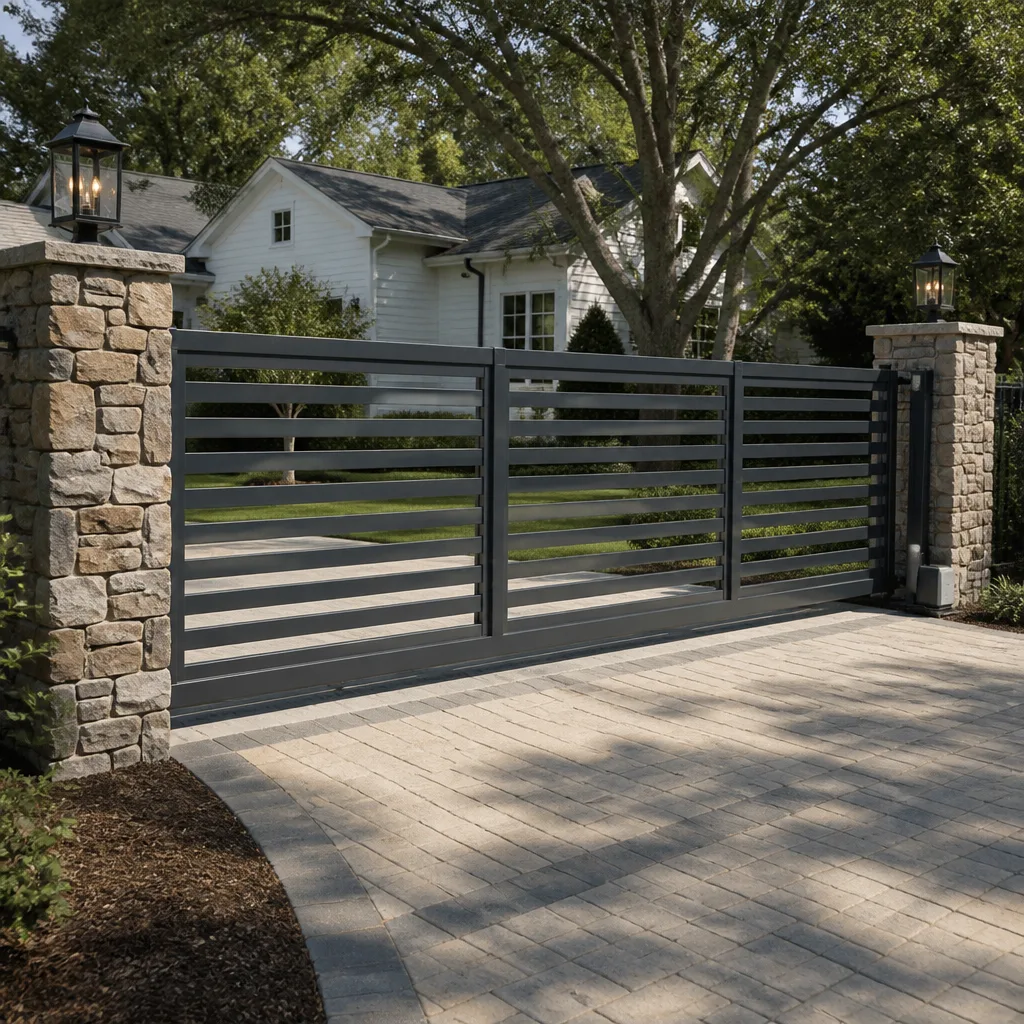
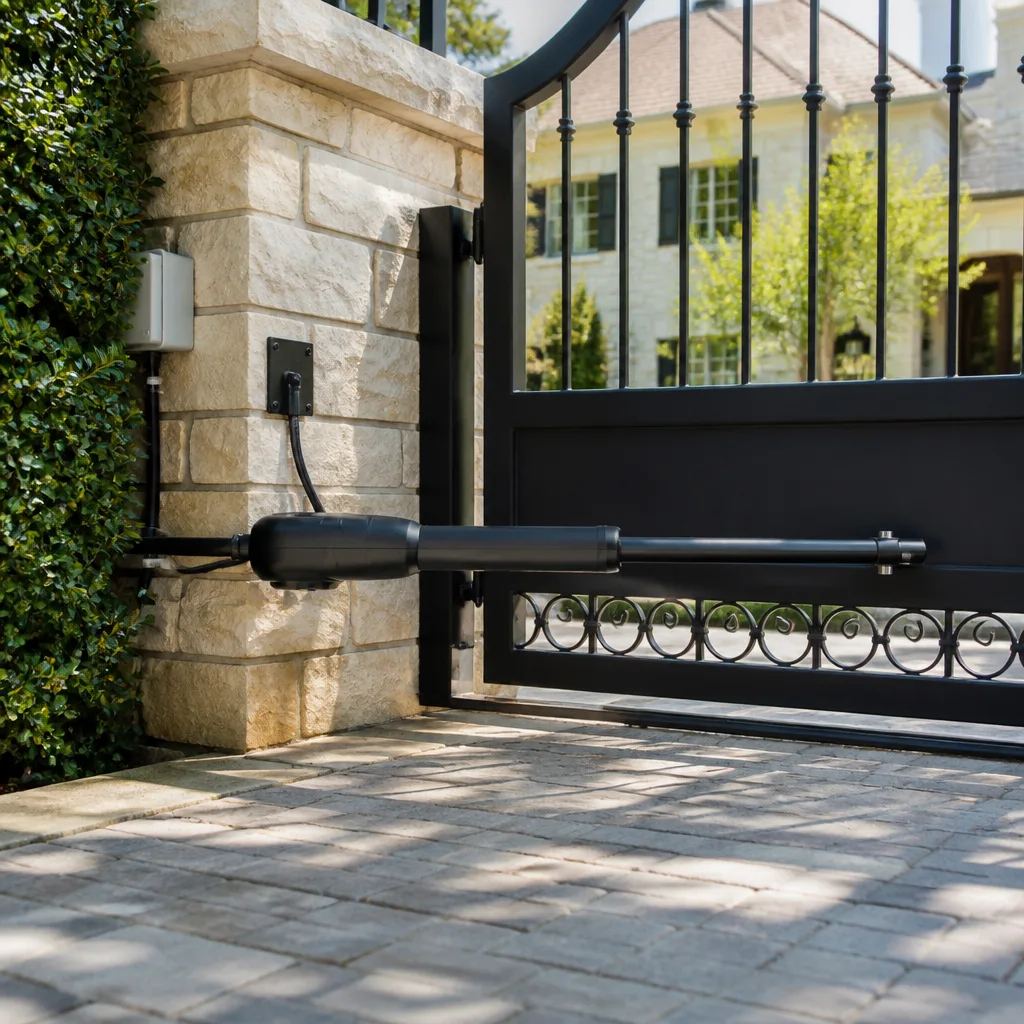
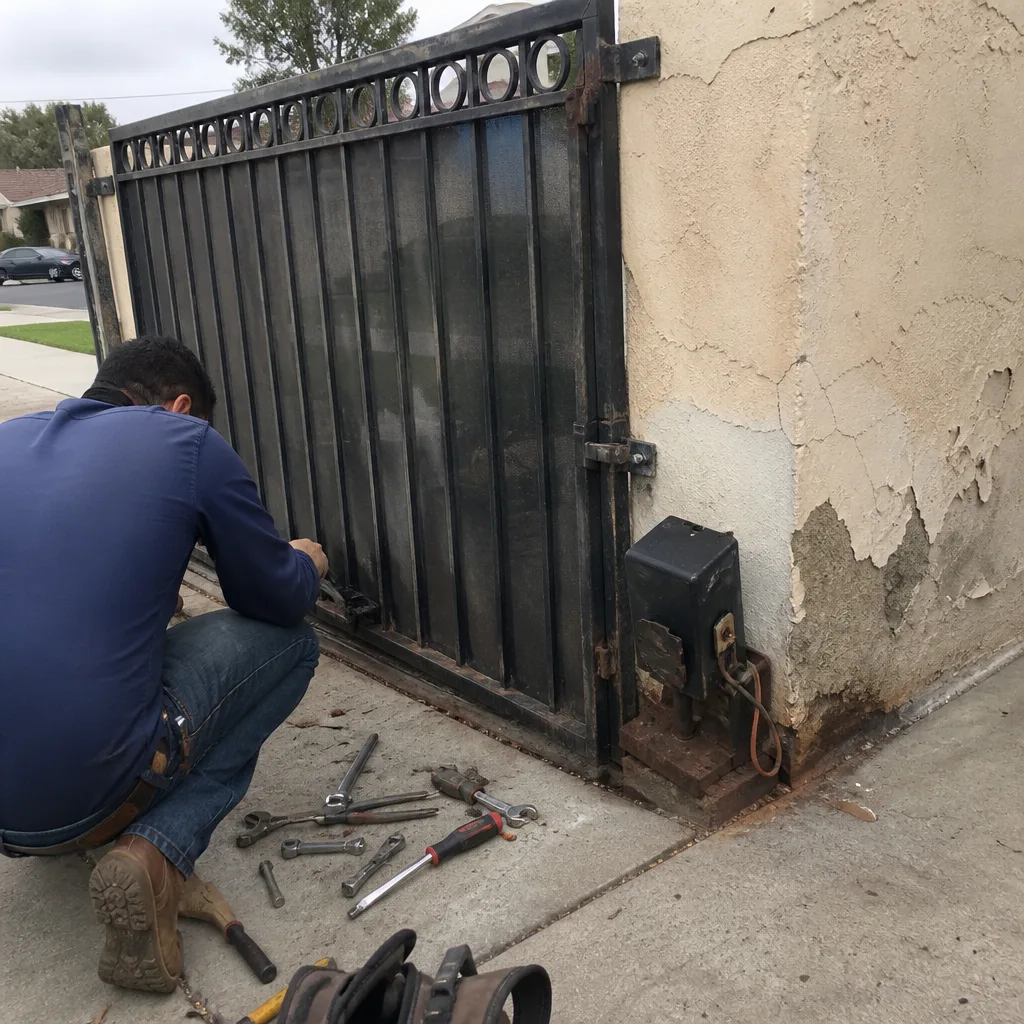 Before
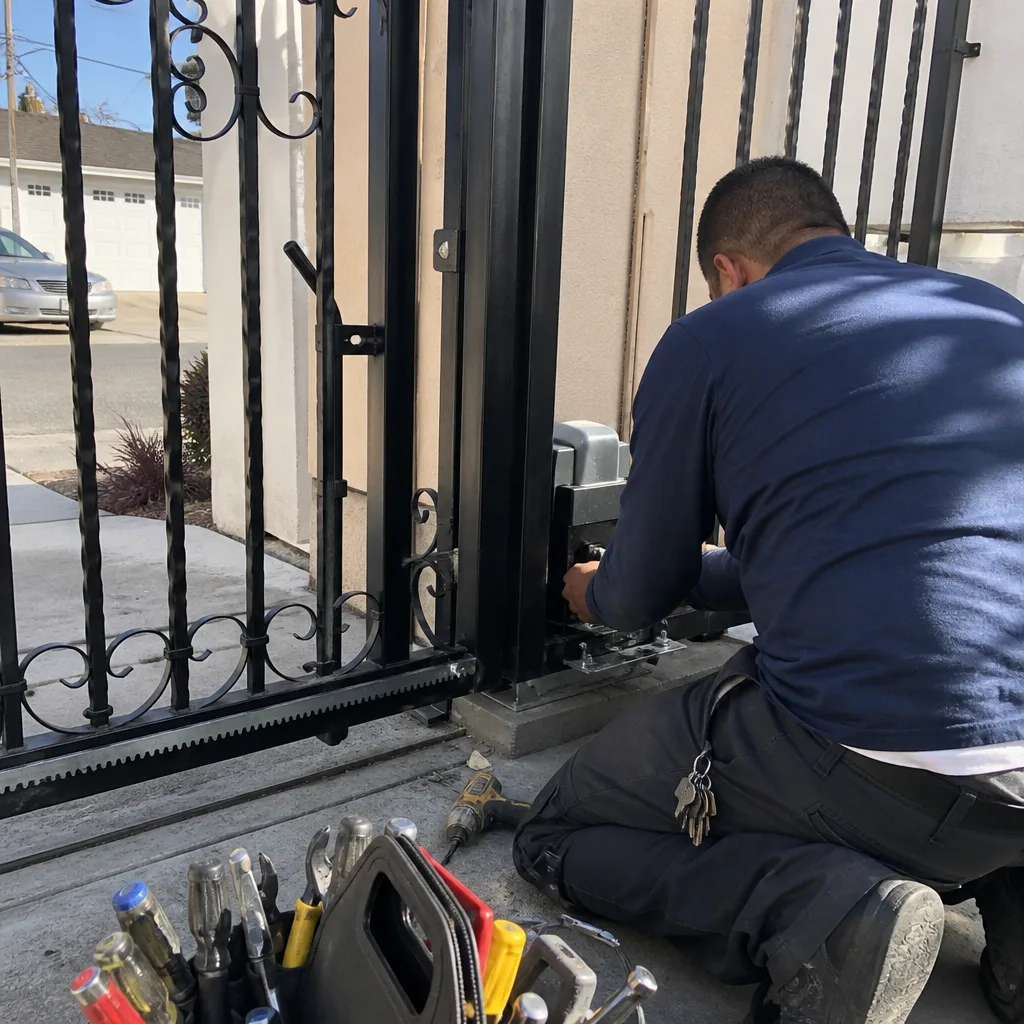 After
After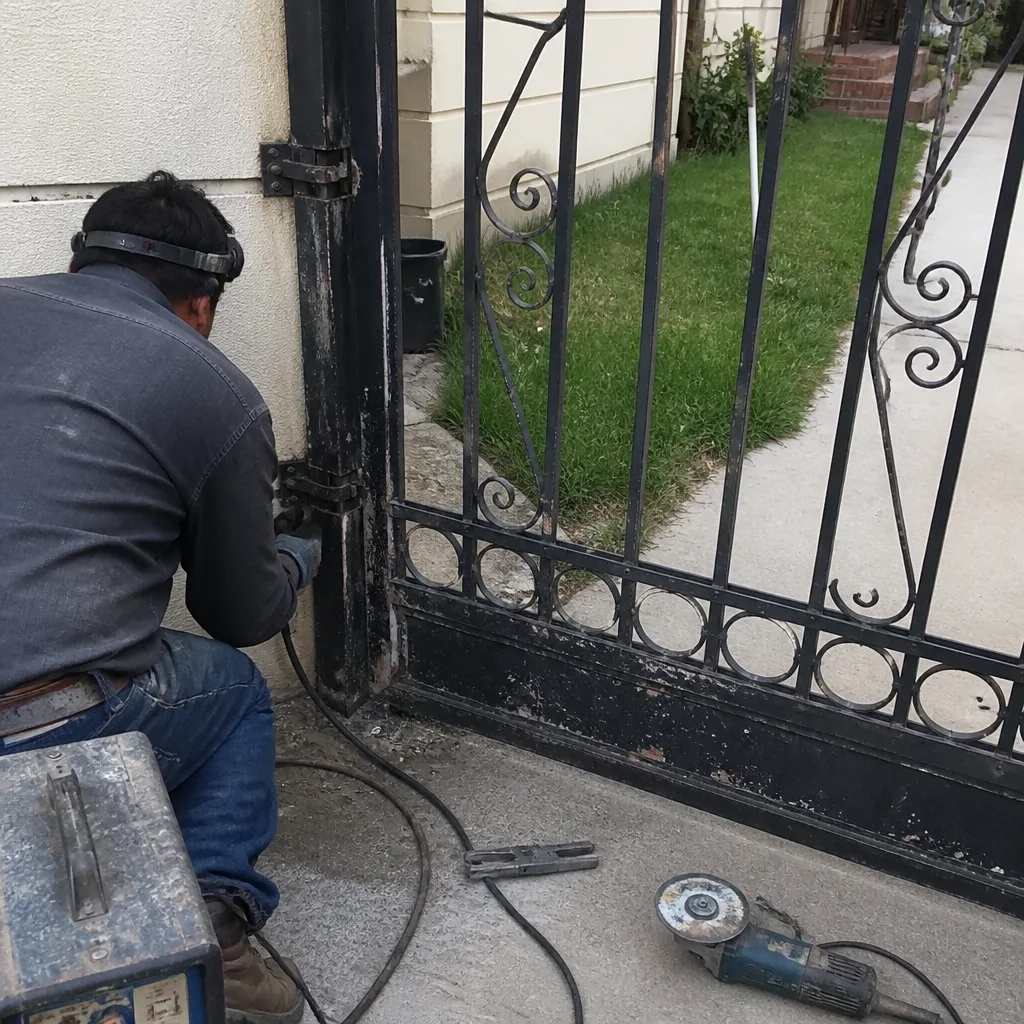 Before
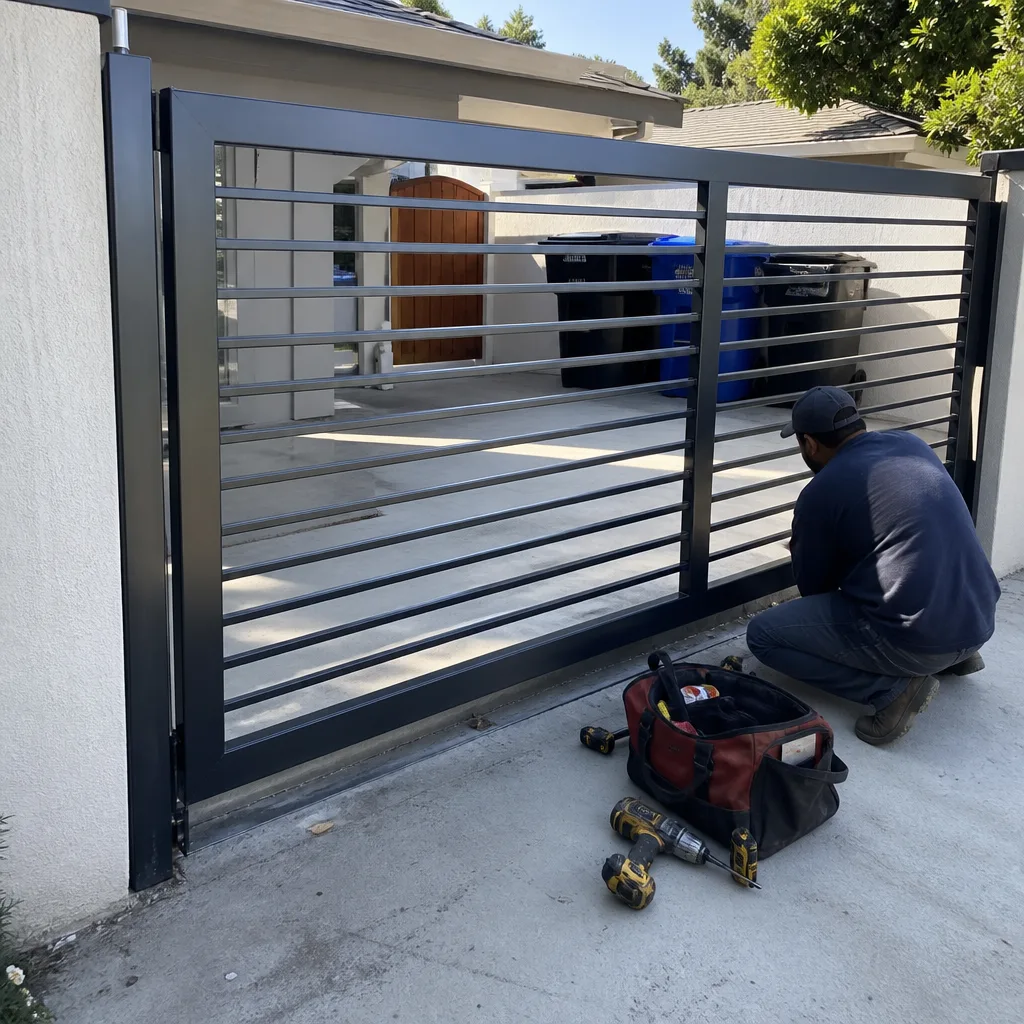 After
After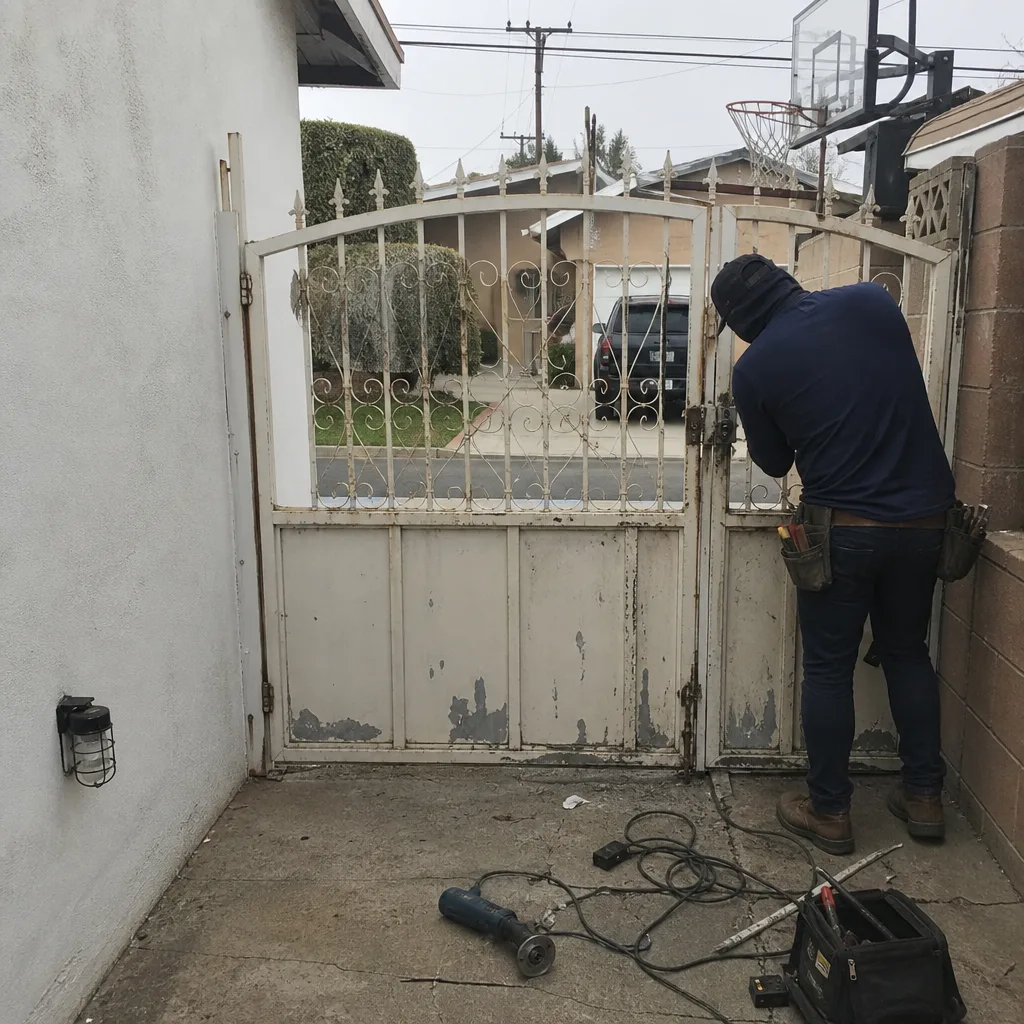 Before
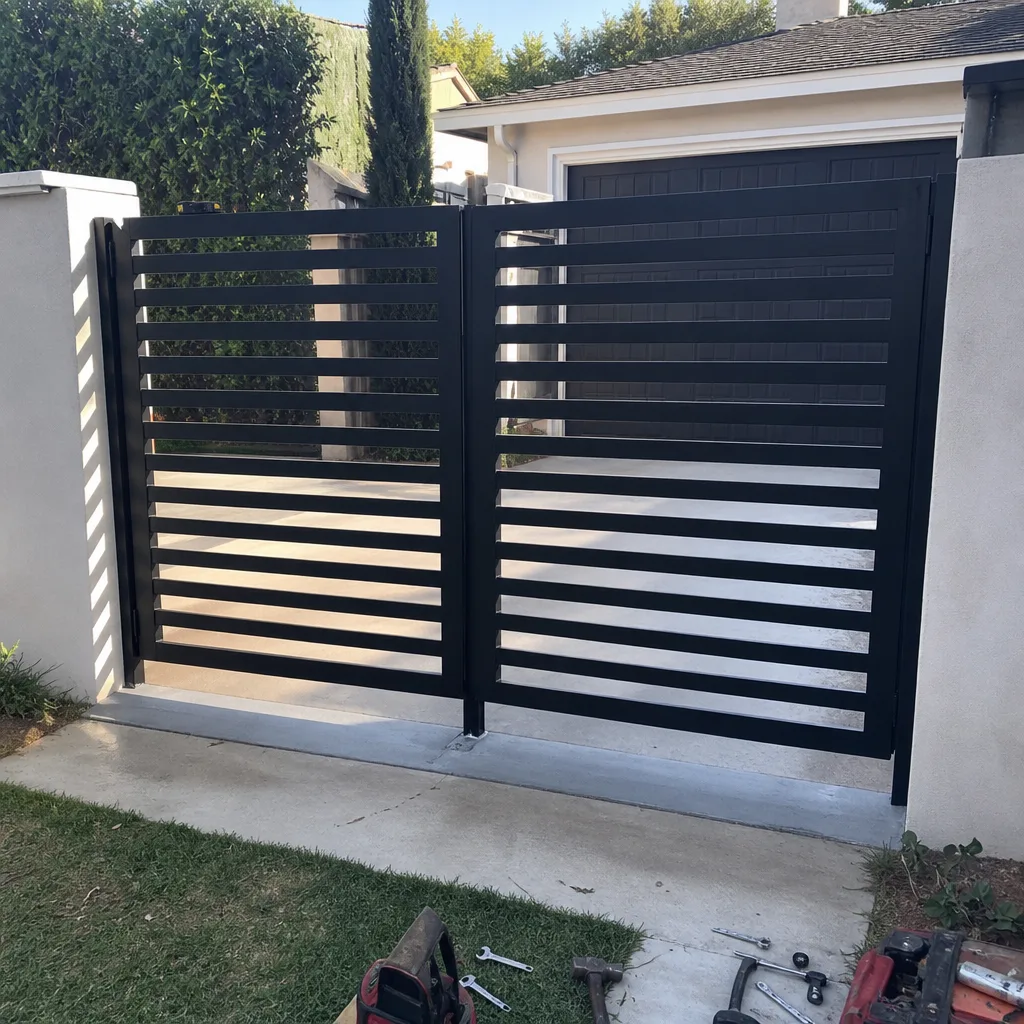 After
AfterDIY vs Professional Gate Repair: The Inglewood Homeowner’s Decision Guide
Here’s a number most homeowners never hear: roughly seven out of ten automatic gate failures in Inglewood are caused by one of three things - a dead capacitor, a misaligned photo eye, or a limit switch that drifted out of adjustment. None of those parts costs more than forty dollars. The expensive part isn’t the component, it’s knowing which of the three failed, and why. This guide walks you through the line between what’s reasonable to handle at your workbench on a Saturday afternoon and what’s better left to someone who has seen the failure before, more times than they can count.
Quick Answer
For a homeowner in Inglewood with basic tools and a cautious disposition, about 15% of common gate problems are genuinely DIY-friendly: cleaning tracks, tightening visible bolts, replacing remote batteries, and clearing obstructed photo-eye lenses. The other 85% - anything involving torsion springs, buried conduit, opener circuit boards, or a gate that has come off its hinges - carries a real risk of injury, property damage, or a repair that fails again in three months. Most Inglewood homeowners are best served by doing the small maintenance themselves and calling a specialist for the structural and electrical work.
Table of Contents
- What You Can Realistically Fix Yourself
- What You Should Never Attempt on Your Own
- The Real Cost of a DIY Repair Gone Wrong
- How Inglewood’s Climate Affects Your Gate
- Inglewood Permit and Code Considerations
- How to Evaluate Any Repair Professional
- Common Mistakes to Avoid
- When to Call a Professional
- Frequently Asked Questions
- The Bottom Line
What You Can Realistically Fix Yourself
Let’s be straight about what’s actually manageable for a homeowner in Inglewood who owns a socket set and a step ladder. The honest list is shorter than most YouTube thumbnails would have you believe, and that’s coming from a company that makes its living on the jobs homeowners don’t want to touch.
Here’s what we tell our own neighbors in Inglewood when they ask us this exact question over the phone:
- Remote control batteries and reprogramming. If your opener responds inconsistently, replace the remote battery first. Most remotes take a standard coin cell or 9-volt. If a new battery doesn’t fix it, the issue is inside the receiver or the board - that’s where DIY ends.
- Photo-eye alignment and cleaning. Those small sensors near the bottom of the gate track get coated in dust, spider webs, and salty air residue. Wiping the lenses with a dry cloth solves a surprising number of “gate won’t close” calls. If the sensor bracket is bent or the wiring is corroded, leave it alone.
- Tightening visible hardware. Gate hinges, post brackets, and opener mounting bolts work loose over time. A socket wrench and some attention will take care of the obvious ones. Don’t touch the bolts on a gate that’s sagging - that’s a symptom of a bent hinge or a failing post, not loose hardware.
- Track cleaning and light lubrication. For sliding gates, clearing the track of gravel, leaves, and packed dirt takes ten minutes. A light spray lubricant on the wheels and track helps, but skip the heavy grease - it attracts Inglewood dust and turns into grinding paste within weeks.
- Checking the power source. Before calling anyone, confirm the outlet the opener is plugged into actually has power. Reset the GFCI if it’s tripped. Check the breaker. You’d be amazed how many service calls in Inglewood end with a tripped outlet.
Notice what these have in common: none of them involve load-bearing parts, electrical components inside the opener housing, or anything under tension. That’s the boundary line, and it’s worth respecting.
What You Should Never Attempt on Your Own
This is the section we’d print on a poster if we thought anyone would read it. Some gate components hurt people when they fail, and they don’t give a second warning.
1. Torsion springs and counterbalance springs
A driveway gate torsion spring holds hundreds of pounds of tension. When it snaps - and they do snap, especially the ones that have been baking in the Inglewood sun for fifteen years - the release happens in a fraction of a second. The spring, the cable, and the bracket become projectiles. This is not a “watch a video and give it a try” repair. It’s a “stay back and call someone who has the right winding bars and has done it a thousand times” repair.
2. Gate opener capacitor replacement
The capacitor inside a gate opener stores an electrical charge even when the unit is unplugged. Discharging it safely requires knowledge of exactly which terminals carry the stored voltage. A mistake here causes a shock that can stop your heart, not just spark your fingers. We service all nine major opener brands at Ironworks Gate Co. - LiftMaster, FAAC, BFT, Linear, Viking, Ghost Controls, DoorKing, Elite, and Mighty Mule - and every one of them has the same danger waiting inside the housing.
3. Anything involving the gate’s weight
A typical steel driveway gate in Inglewood weighs between 300 and 800 pounds. When a gate falls off its track or slips off a hinge, it doesn’t move slowly. It drops. Homeowners have been pinned, crushed, and killed trying to reposition a gate with a car jack or a few friends. We mean this seriously: do not get underneath, behind, or in the path of a gate that is off its mounting hardware.
4. Buried conduit and underground wiring
Many Inglewood homes run gate opener power through buried conduit. Diagnosing a short in that line requires a line tracer and an understanding of how the original installer routed it. Digging blindly means hitting the line, hitting a sprinkler pipe, or hitting something worse. This is not a shovel-and-hope job.
The Real Cost of a DIY Repair Gone Wrong
The math on DIY gate repair looks good until it doesn’t. Let’s run the numbers on a typical scenario we see in Inglewood every month.
Scenario: A homeowner notices their sliding gate is slower than it used to be. They search online, find a forum post about adjusting the opener’s force settings, and crank the adjustment screw to “fix” it. The gate now moves faster, but the added force means it no longer stops when it meets resistance. Two weeks later, it closes on the family car and bends the gate’s leading edge.
The bill:
- Bent gate frame repair: $350 to $600
- Force setting recalibration: included in a service call of $95 to $150
- New safety edge or photo-eye replacement (damaged by impact): $120 to $250
- Total: $565 to $1,000
The original correct repair - adjusting and testing the force settings as part of a standard service call - would have cost between $95 and $150. The DIY approach turned a minor adjustment into a major repair.
That’s the pattern. DIY repairs on gate systems rarely fail catastrophically on day one. They fail a few weeks later, when the homeowner has stopped paying attention. By then, a small problem has become a structural one.
We see the same math with hinge replacements, wheel swaps, and circuit board troubleshooting. The part is cheap. The knowledge of how that part interacts with the other 40 parts in the system is what you’re actually paying for.
How Inglewood’s Climate Affects Your Gate
Inglewood’s weather is mild by California standards, but it’s not gentle on gate hardware. The combination of salt air drifting in from the coast, persistent morning fog, and summer temperatures that climb into the 80s creates a specific corrosion and expansion profile that affects gates differently than the inland valleys or the mountains.
Here’s what we mean specifically:
- Coastal salt air accelerates hinge corrosion. Inglewood sits close enough to the Pacific that airborne salt finds its way into gate bearings and pivot points. Steel hinges that would last 20 years in Riverside will show pitting and stiffness within 10 years in Inglewood. This is why we recommend stainless or galvanized hardware on every replacement we do in the area.
- Temperature swings loosen bolts on schedule. The daily expansion and contraction cycle - cool foggy mornings burning off into warm afternoons - works bolts loose over time. It’s a slow process, measured in years, but it’s why a five-year-old gate in Inglewood has noticeably more loose hardware than a five-year-old gate in a more stable climate.
- Dust and debris load is a sliding gate’s enemy. The dry season brings fine dust that settles into tracks and coats opener gears. Combined with light morning moisture, it forms a paste that grinds down plastic drive gears. This is why track cleaning and light lubrication is genuinely useful DIY work in Inglewood - it directly counters the local conditions.
- Sun exposure degrades plastic components. UV radiation weakens plastic housing components, remote clips, keypad covers, and safety-edge strips. A five-year-old keypad in full afternoon Inglewood sun will show micro-cracks and fading. Shade it, or expect to replace it sooner than the opener itself.
These aren’t theories. These are the patterns we’ve seen across thousands of Inglewood service calls over the years.
Inglewood Permit and Code Considerations
Here’s a question most homeowners never think to ask before starting a gate project: does Inglewood actually require a permit for this?
The answer depends on what you’re doing.
- Repairing an existing gate: Generally no permit required. Replacing a hinge, swapping a wheel, installing a new opener on an existing gate - these are maintenance and repair activities. The City of Inglewood does not require a permit for like-for-like repair work.
- Installing a new gate: Yes, in most cases. The City of Inglewood considers a new driveway gate a structure, and structures require zoning review. The primary concern is setback - the gate must be far enough off the property line and the sidewalk that it doesn’t swing into public right-of-way. The City also enforces height limits and materials standards in some historic districts.
- Adding a new automatic opener: The City requires that automatic gates comply with UL 325 safety standards, which mandate safety devices like photo eyes, safety edges, and automatic reverse systems. This isn’t Inglewood being particular - it’s federal safety code with teeth, and the City does inspect for it.
- Electrical work for the opener: Running a new power line from your panel to the gate location may require an electrical permit, particularly if it involves new conduit or a dedicated circuit.
The practical takeaway for an Inglewood homeowner deciding between DIY and professional: basic repair work is yours to do without any city involvement. New installation and new electrical runs should have someone checking that the job meets local code. We handle permit documentation for our Inglewood installation customers as part of the project scope, so they don’t have to spend a day at City Hall figuring out the forms.
One more note for anyone buying a home in Inglewood with an existing automatic gate: if the gate was installed without permits and the city becomes aware of it - through a neighbor complaint or an inspection triggered by other work - you can be required to bring it into compliance or remove it. It’s worth verifying permit status before you buy, not after.
How to Evaluate Any Repair Professional
Every homeowner over 55 in Inglewood has a story about a contractor who let them down. The painter who never finished. The plumber who charged twice the estimate. The handyman who made the problem worse and then disappeared. We hear these stories weekly, and we’ve built our company specifically to be the opposite of that experience.
Here’s a practical checklist for evaluating anyone you’re considering hiring for gate work in Inglewood:
- Do they answer the phone? Call the number outside of business hours. If you get a voicemail tree or an answering service during the day, that’s a signal about how they’ll handle you when something goes wrong mid-job. A live person answers our phones 24 hours a day, 7 days a week.
- Will they give you a written price before starting? A professional who hesitates to put a number on paper is planning to find the number later. We settle upfront pricing before a single bolt is turned - quoted and agreed before any work starts.
- What brands do they actually service? Ask. Many generalist handymen will say they work on gate openers and then discover they’ve never seen your opener’s make in person. At Ironworks Gate Co., our technicians are trained on nine major gate-automation brands: LiftMaster, FAAC, BFT, Linear, Viking, Ghost Controls, DoorKing, Elite, and Mighty Mule.
- Is there a written guarantee? Verbal promises mean nothing when the gate fails again next month. Ask for the guarantee in writing, with the terms clear. Our 90-Day Done Right Promise is exactly that - written, no paperwork, no arguing. If it’s not right, we come back and make it right.
- Who exactly is coming to your home? A company that sends subcontractors is a company that doesn’t stand behind the person in your driveway. Our technicians are background-checked, uniformed, and work under the K.E.Y.S. values code: Krafted right, Every time, Your home first, Standing behind it.
- Do they specialize in gates, or is this a side job? Gate automation is not a handyman task. It’s a discipline that combines welding, electrical work, and electronics troubleshooting. If the person you’re talking to also does fences, decks, drywall, and painting, they’re not a gate specialist.
You don’t need to ask all six questions on the phone. But asking the first three will eliminate most of the contractors in Inglewood who would have let you down anyway.
Common Mistakes to Avoid
- Adjusting the opener’s force settings to “fix” a slow gate. Slow gate movement is a symptom, not a setting. Crank up the force and you’ve just told the gate to push through resistance - including pets, children, and cars. Diagnose the actual cause: worn wheels, low battery, a failing capacitor, or debris in the track.
- Using WD-40 on hinges, rollers, or the track. WD-40 is a water displacer, not a lubricant. It washes away existing lubrication and evaporates, leaving bare metal behind. Use a proper silicone or lithium lubricant for gate components. In Inglewood’s dry season, WD-40-treated parts seize up faster than untreated ones.
- Ignoring a gate that’s slightly out of alignment. A gate that catches on the latch or scrapes at one point is telling you something is wrong - a bent hinge, a settling post, a failing wheel. Wait too long and the damage spreads from one part to three. Address alignment issues the week you notice them.
- Replacing the opener before checking the gate itself. A new opener cannot fix a gate that’s too heavy, misaligned, or binding on its hinges. The opener just burns out trying. Inspect and repair the gate structure first, then evaluate the opener.
- Buying the cheapest opener on the market and expecting it to last. In Inglewood’s climate, cheap openers with plastic gears fail within two to three years. The purchase price looks good until you factor in the second purchase you’ll make in 2027. Quality openers from brands like LiftMaster and DoorKing last a decade or more with basic maintenance.
- Forgetting about the safety sensors entirely. UL 325 safety requirements exist because automatic gates have killed people. The photo eyes and safety edges are not optional accessories - they’re required equipment that must be tested and maintained. A gate with non-functional safety sensors is a serious liability, not a minor inconvenience.
- Assuming the gate problem is the gate’s fault. In many Inglewood homes, the gate opener runs on the same circuit as landscape lighting, pool equipment, or an outdoor outlet. A tripped GFCI on that circuit takes the gate down with it. Check the simple stuff - breakers, outlets, GFCI buttons - before assuming you need a repair at all.
When to Call a Professional
Call a professional when the gate involves weight, tension, electricity, or code compliance. That’s the short version.
The longer version: call when the gate sags, when it makes a grinding sound, when it opens halfway and reverses, when the opener hums but doesn’t move, when a spring looks stretched or cracked, when sparks come from the control box, when the gate has fallen off its track, or when you’ve already tried the DIY fix and the problem came back. In our experience, the second visit is always more expensive than the first would have been.
If you’re in Inglewood and you’re not sure whether your situation is a call or a DIY Saturday project, call us and describe what you’re seeing. A live person answers the phone, and we’ll tell you honestly whether it’s safe to tackle yourself. Ironworks Gate Co. offers free estimates in Inglewood. Call (747) 340-9707.
Frequently Asked Questions
Gate repair in Inglewood typically costs between $95 and $150 for a standard service call with basic labor, and $150 to $600 for most common repairs including hinge replacement, wheel swaps, and opener adjustments. Full opener replacement runs $800 to $2,500 depending on the brand and access control features. Every job gets an upfront written price before work starts, so you’ll never face a surprise on the bill. Call (747) 340-9707 for an exact quote on your gate - estimates are free.
Yes. Our service area covers all of Inglewood and the surrounding communities, and we keep emergency response time short for failures that leave your property unsecured. A live person answers the phone 24 hours a day, 7 days a week. Call (747) 340-9707 and we’ll tell you exactly when we can be there.
That depends on the gate’s structure. A well-built steel gate with surface rust and worn hardware is almost always worth repairing - the metal itself often has another 20 years in it. A gate with rust-through on the frame, sagging posts, or a cracked weld at a structural joint is usually better replaced. We’ll give you an honest assessment either way, because we’d rather do a $300 repair now and earn your trust for the next job than sell you a $3,000 replacement you didn’t need.
No. The City of Inglewood does not require permits for repair and maintenance work on existing gates, including opener replacement. New gate installations and new electrical runs may require permits, which we handle on your behalf as part of installation projects.
We service nine major gate-automation brands: LiftMaster, FAAC, BFT, Linear, Viking, Ghost Controls, DoorKing, Elite, and Mighty Mule. Our technicians carry parts and diagnostic equipment for all nine, which means most repairs in Inglewood are completed in a single visit.
A quality opener from a brand like LiftMaster, DoorKing, or Elite, properly installed and maintained, should last 10 to 15 years in Inglewood’s climate. Inexpensive big-box openers with plastic drive gears typically fail within 2 to 4 years, especially when installed on gates that are heavier than the opener’s rated capacity. We also offer an $89 Seasonal Tune-Up for Inglewood homeowners who want to extend the life of their opener. Call (747) 340-9707 to schedule one.
The Bottom Line
The DIY-versus-professional decision comes down to one question: does this repair involve weight, tension, electricity, or a safety system? If the answer is no - you’re cleaning a track, swapping a remote battery, or tightening a visible bolt - go ahead and do it yourself. If the answer is yes, the risk-to-reward math doesn’t work in your favor. Gate systems are unforgiving. The parts are heavy, the springs are dangerous, and the electrical components can injure you even when unplugged.
For Inglewood homeowners who’ve been burned by contractors before, we built Ironworks Gate Co. to be the last gate company you’ll ever need to call. A live person answers the phone 24/7. Pricing is written and agreed before work starts. Every job is backed by our 90-Day Done Right Promise. We’ve been serving Inglewood and the surrounding communities for over 42 years, and we plan to be here for another forty. Call (747) 340-9707 for a free estimate and a square deal.
Written by Victor Salinas, Owner at Ironworks Gate Co., serving Inglewood since 2013.
Explore more from Ironworks Gate Co. home.