
Last updated August 25, 2026
Free on-site gate assessment - hinges, posts, and your LiftMaster or Nice gate operator checked before anything is quoted
The assessment is free and the quote is the invoice.
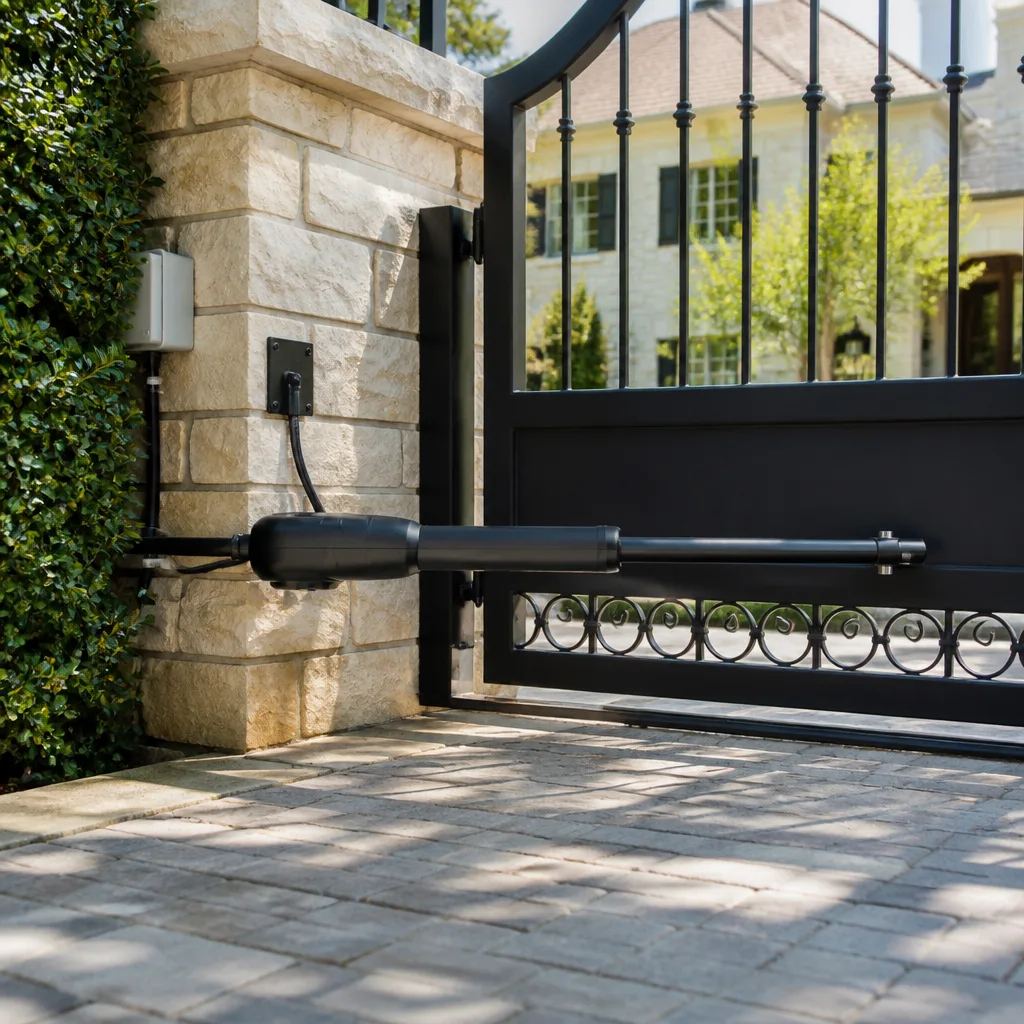
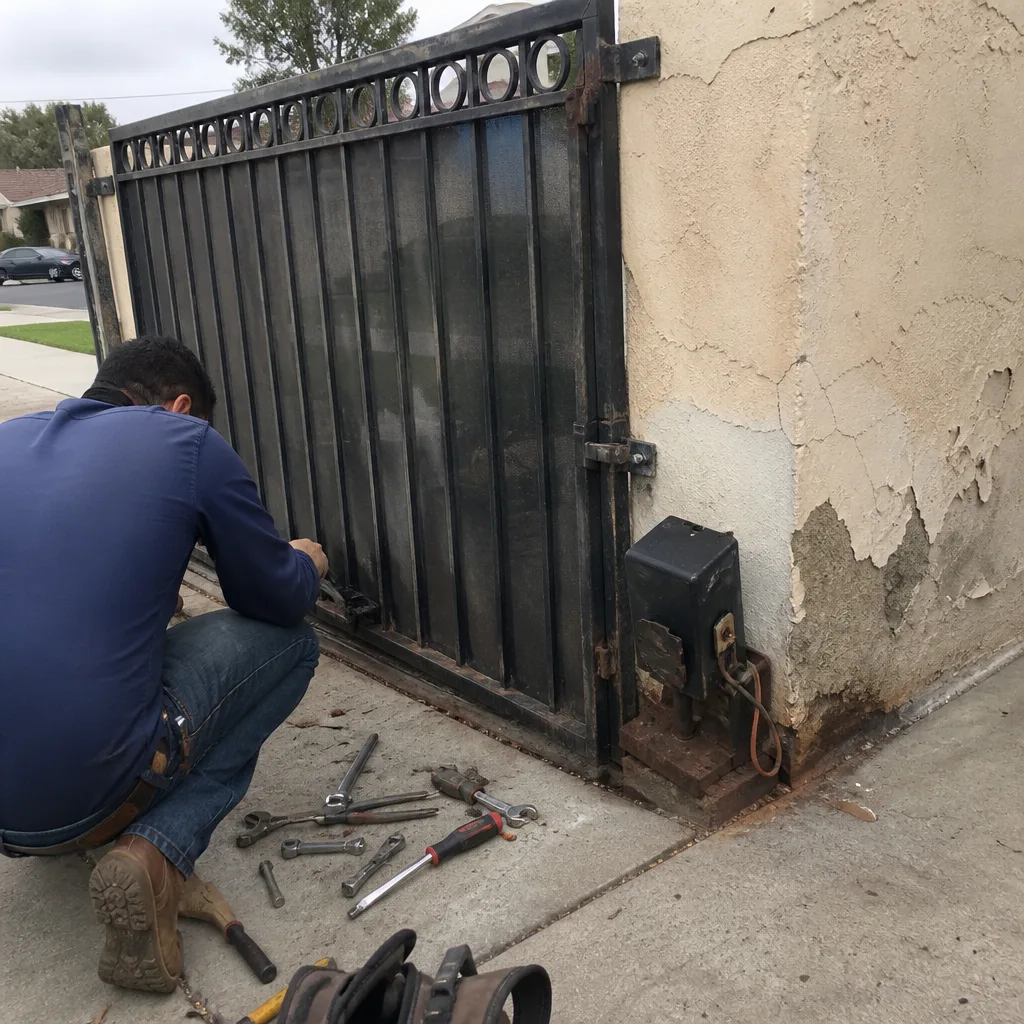 Before
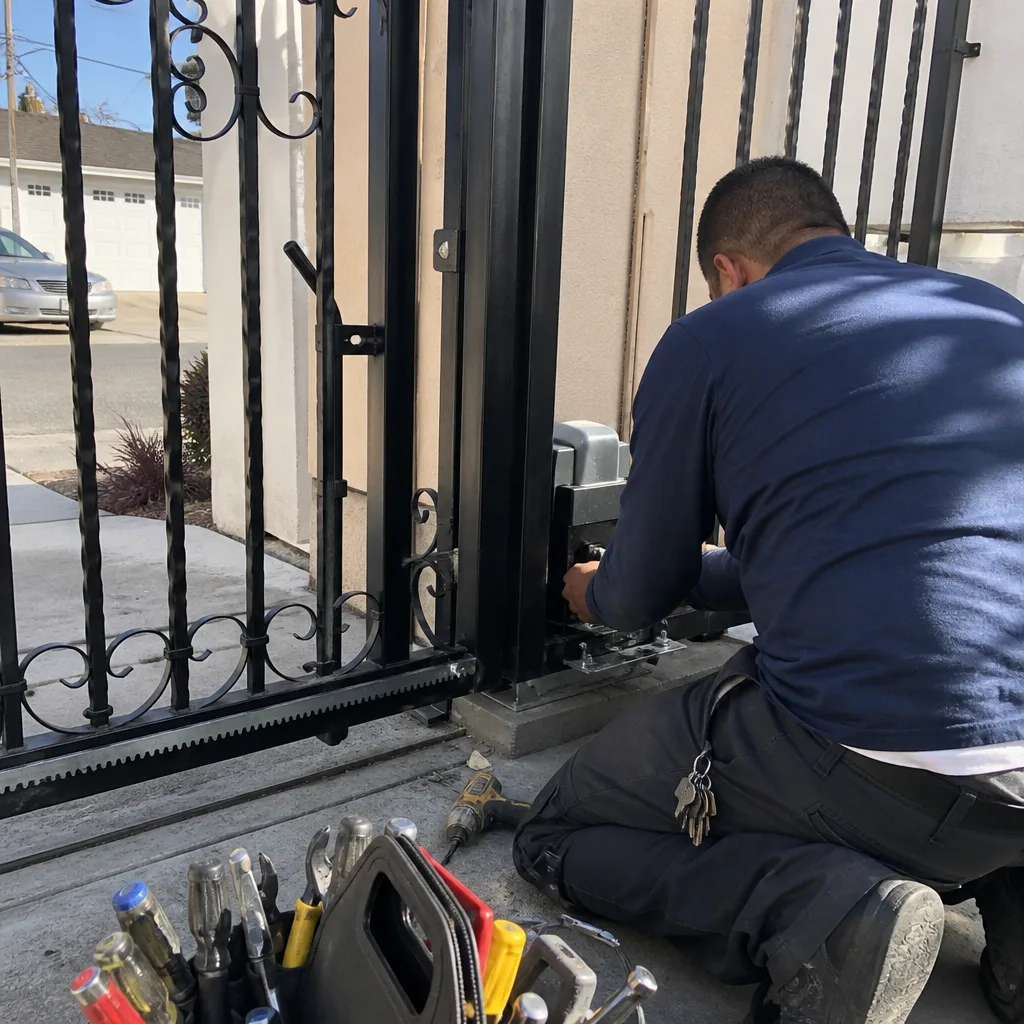 After
After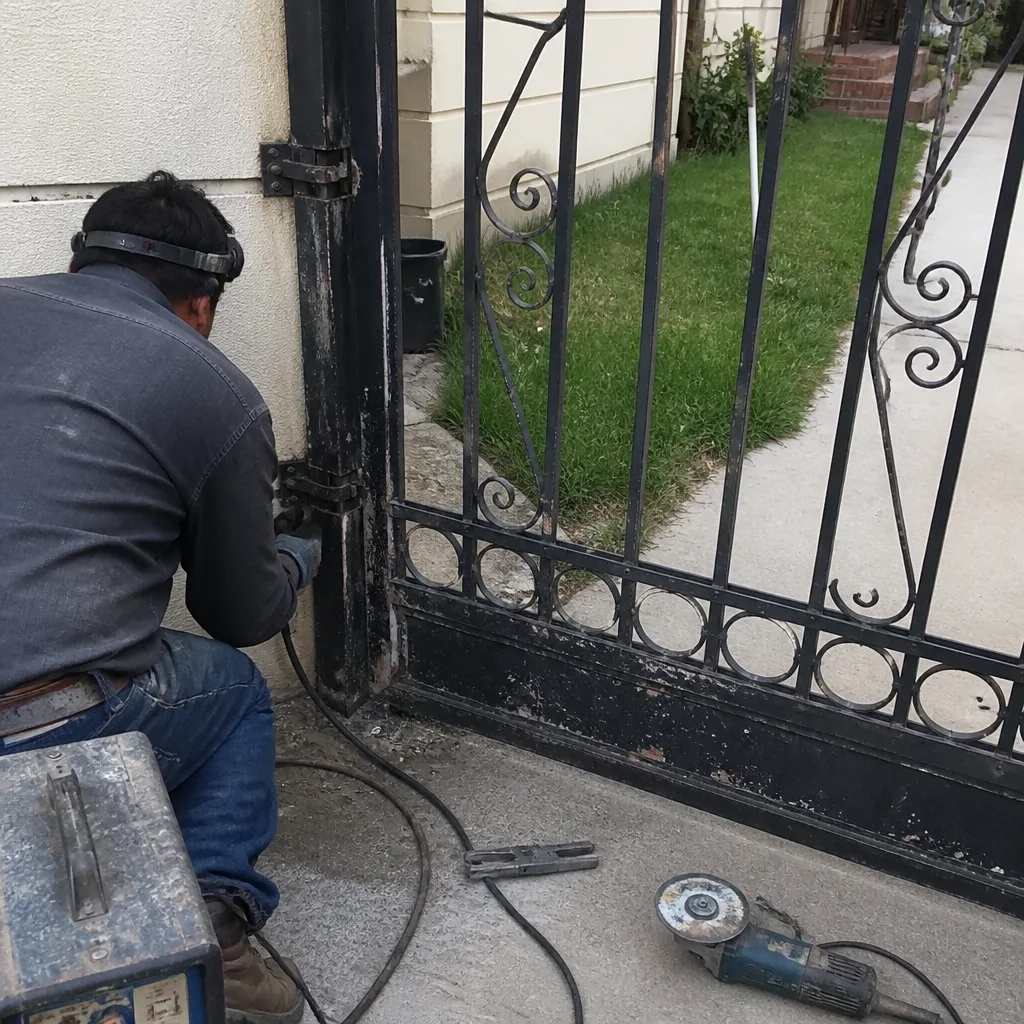 Before
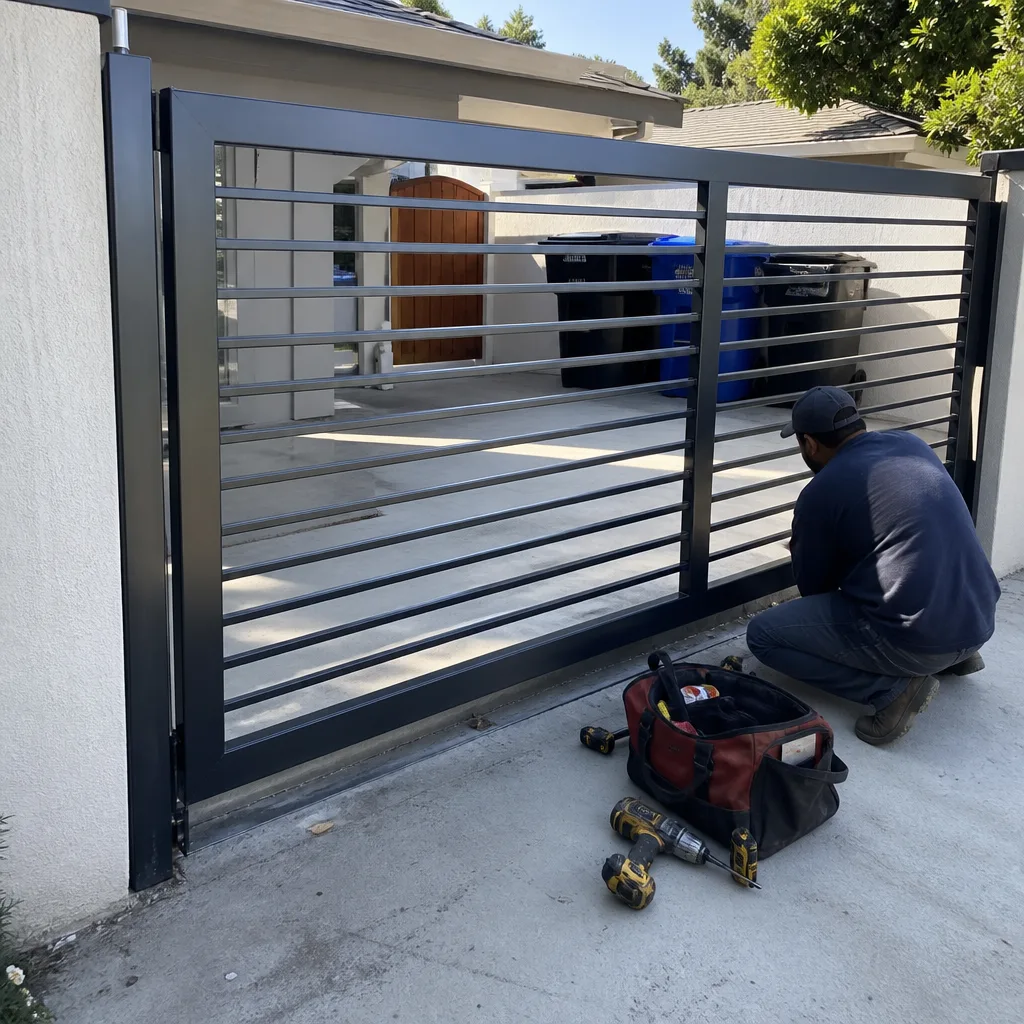 After
After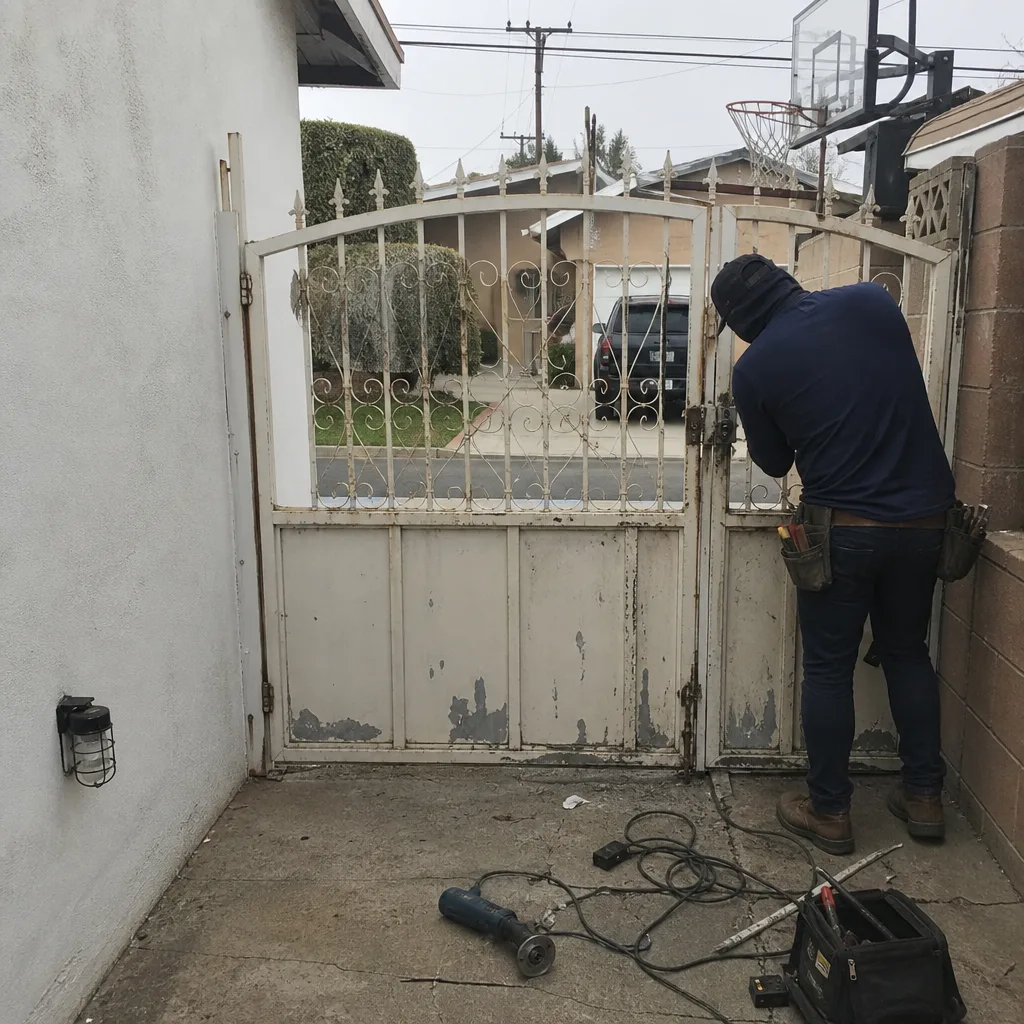 Before
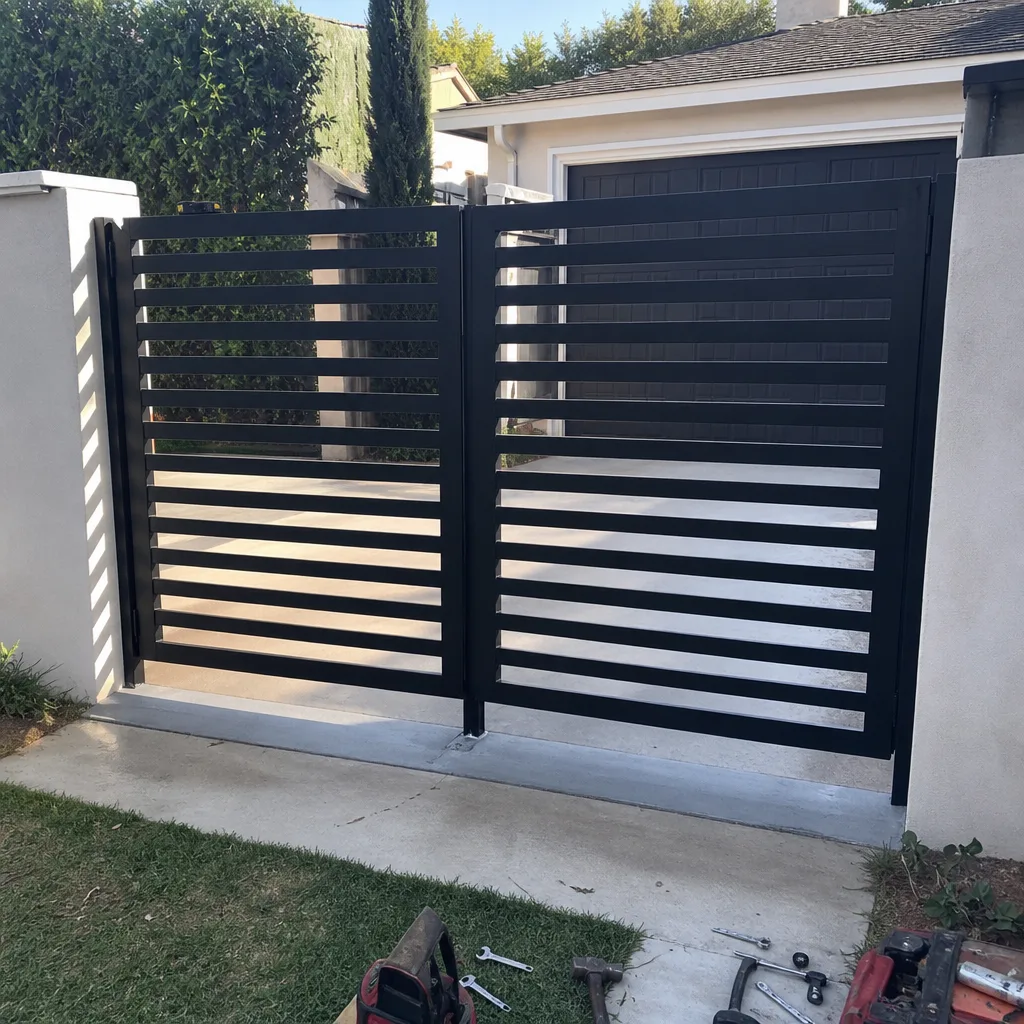 After
AfterSeasonal Gate Repair Care for Inglewood: Year-Round Homeowner’s Guide
Most Inglewood homeowners don’t think about their driveway gate until it stops moving. That’s the expensive way to own a gate. A gate that gets ten minutes of seasonal attention each quarter will routinely outlast one that gets ignored by five to seven years. In our 42 years working on Inglewood gates, we’ve replaced motors at year six that should have run to year fourteen, and we’ve welded hinges at year eight that were installed in 1995. This guide walks through what your gate actually needs, season by season, in Inglewood’s specific climate, and what you can safely handle yourself versus what deserves a trained technician.
Quick Answer
The short version: Inglewood gates need four seasonal checks a year, each taking about ten minutes. Spring is for clearing winter rust and checking hinge wear. Summer is for testing the motor against heat and adjusting the auto-close timing. Fall is for lubricating rollers, chains, and pivot points before the rainy season. Winter is for checking drainage, weather seals, and battery backup after storms. Most homeowners can do the visual inspection and basic lubrication; anything involving springs under tension, welded joints, or the opener’s electrical wiring should go to a professional.
Table of Contents
- Why Inglewood Gates Fail Earlier Than They Should
- Spring Gate Maintenance in Inglewood: The Rust and Hinge Season
- Summer Gate Care: Heat, Motors, and the Auto-Close Setting
- Fall Gate Prep: Lubrication and Rain-Season Readiness
- Winter Gate Care: Storms, Drainage, and Backup Power
- The 10-Minute Monthly Gate Check Every Homeowner Should Do
- When to Repair vs. Replace: A Straight Answer
- Common Mistakes That Shorten a Gate’s Life
- When to Call a Professional
- Frequently Asked Questions
- The Bottom Line
Why Inglewood Gates Fail Earlier Than They Should
An automatic driveway gate is two systems sharing one frame: the mechanical side, meaning hinges, wheels, track, chain, welds, and the weight of the gate itself, and the electrical side, meaning the motor, control board, sensors, keypad, and any battery backup. Most gate failures in Inglewood are not caused by either system simply wearing out. They’re caused by one system slowly damaging the other. A sagging hinge makes the gate heavier to move, which makes the motor work harder, which burns out a control board three years earlier than it should have failed. A misaligned safety sensor makes the gate reverse mid-cycle, which strains the gearbox, which was never designed for that many reversals.
Inglewood’s climate contributes in specific ways. We sit close enough to the coast that morning marine layer settles on metal in spring and early summer, accelerating surface rust on unprotected welds and hardware. Afternoon summer temperatures in the high 80s and low 90s push opener motors to run hot, especially when they’re mounted in black metal housings with direct sun exposure. In winter, we get heavy rain events followed by long dry spells, which means soil around gate posts expands and contracts, slowly shifting post alignment. No other city in the LA basin has quite this combination of moisture, heat, and soil movement in the same calendar year.
The good news is that seasonal attention is cheap and fast. A homeowner who spends forty minutes total across the year, four ten-minute checks, will catch most problems when they’re still inexpensive. Here at Ironworks Gate Co., we see the difference constantly: a homeowner who calls us for a $89 seasonal tune-up every fall rarely calls us for a $900 motor replacement. The arithmetic is simple.
Spring Gate Maintenance in Inglewood: The Rust and Hinge Season
Spring is when Inglewood’s marine layer sits on metal for hours each morning. That moisture is the enemy of any bare steel surface. By April, we routinely see surface rust forming on hinge pins, chain links, and the undersides of gate frames, especially on older gates where the original powder coating has worn thin at the corners and weld points.
Here’s a spring checklist a homeowner can work through in about fifteen minutes:
- Walk the full length of the gate and look for rust. Focus on the hinge barrels, the bottom corners of the frame, and any place two pieces of metal touch. Light surface rust you can address with a wire brush and a rust-inhibiting paint. Structural rust, meaning metal you can flake off with a screwdriver, needs a welder’s attention.
- Open the gate by hand. With the opener disengaged (every opener has a manual release), push the gate through its full travel. It should move with one hand and feel balanced. If it’s heavy, sticky, or you hear metal grinding, the weight distribution is off and the hinges are telling you something.
- Check every bolt with a wrench, not a glance. Gate frames vibrate every single time they cycle. Bolts back out slowly. In Inglewood we see this most on ornamental steel gates with decorative scrollwork, where vibration concentrates at the joints.
- Clean the wheels and track. Slide gates, common on Inglewood lots with narrower driveways, run on wheels that collect dirt, leaves, and grit. Clear the track, wipe the wheels down, and check for flat spots.
- Test the auto-reverse safety function. Place a trash can or cardboard box in the gate’s path and close it. The gate should reverse before touching the object. If it doesn’t, you have a safety problem that needs professional attention immediately, not seasonally.
One thing worth saying plainly: hinge springs and counterbalance springs store a lot of energy. If your gate has exposed torsion springs, do not attempt to adjust or replace them yourself. Those springs are under enough tension to break a hand or worse if they let go. This is a job for a technician with the right tools and the right training.
Summer Gate Care: Heat, Motors, and the Auto-Close Setting
Summer in Inglewood runs hot and dry. When the temperature pushes past 90 degrees, your gate opener’s motor is already warm before the first cycle of the day starts. Add direct afternoon sun on a dark metal operator housing, and you’re asking the motor to work at the upper edge of its designed temperature range. This is the season when we get the most calls about gates that open but won’t close, gates that stop mid-cycle, and remotes that work intermittently.
The most common summer failure we see is the auto-close timer fighting with a heat-stressed motor. Here’s what happens: the gate opens, the timer counts down, the gate starts to close, and the motor, already heat-soaked, triggers its internal thermal overload. The gate stops. The homeowner presses the remote again. The gate closes halfway and stops again. Each partial cycle makes the heat worse. The fix is usually not a new motor, it’s a longer auto-close delay.
Your summer checklist:
- Reduce the auto-close delay to no faster than 15 seconds, or turn it off entirely on days over 95 degrees. Let the homeowner control the close command manually on the hottest days. The motor will thank you.
- Shade the operator housing if practical. A small canopy or a strategically placed plant that keeps direct sun off the motor housing lowers the internal temperature by ten to fifteen degrees. If you have a LiftMaster or Elite operator in a black housing, this matters more.
- Check the opener’s cooling vents. Most residential operators have vents designed to let heat escape. When they’re clogged with dust and spider webs, the motor runs hotter. Compressed air or a soft brush handles this in minutes.
- Watch for slowing movement. If the gate visibly moves slower in hot weather than it did in spring, the motor may be struggling against resistance somewhere. That’s worth a diagnostic visit before the motor fails completely.
- Test the remote from the street, not from the driveway. Inglewood has its share of radio interference. If the remote works at ten feet and not at thirty, the issue is often the antenna position or an aging receiver, both simple professional fixes.
We service nine brands of gate automation, including DoorKing, Mighty Mule, and LiftMaster, and heat-related failure patterns differ by brand. DoorKing operators are generally the most heat-tolerant of the common residential brands, while some Mighty Mule solar models need battery health checked more often in summer. The point is not to diagnose the brand yourself, it’s to notice when the heat is changing your gate’s behavior and act before a minor heat issue becomes a full motor replacement.
Fall Gate Prep: Lubrication and Rain-Season Readiness
Fall is the most important season for gate maintenance in Inglewood, because it’s the last chance to correct anything before winter rains expose every weakness. A dry gate that works fine in October will seize up, short out, or flood in December if it hasn’t been prepped.
Here’s what should happen every fall, ideally in September or early October before the first heavy rain:
- Lubricate every moving metal part. Use a lubricant designed for gate hardware, not WD-40. Hinge pins, roller bearings, chain links, and the opener’s drive mechanism all need a light coat of the right lubricant. Too much is as bad as too little: excess lubricant attracts dirt, and dirt becomes grinding paste.
- Check and refresh weather seals. On slide gates and swing gates with bottom seals, look for cracks, tears, or gaps. A good seal keeps water out of the track and away from the lower frame.
- Clear drainage paths. Inglewood’s winter rain comes in bursts. If water pools at the base of the gate posts during a storm, the soil softens and the post shifts. Make sure water can drain away from both the gate and the operator.
- Check the battery backup. If your opener has a battery backup, and most modern ones do, now is the time to check its charge and condition. A battery that sat unused all summer lost capacity. Rainy season power outages are when you discover a dead backup, which is the worst time to discover it.
- Have the gate professionally tuned. We offer an $89 seasonal tune-up that covers lubrication, hinge inspection, opener diagnostics, safety sensor alignment, and a written summary of what we found. For most Inglewood homeowners, once a year in the fall is the right cadence.
We’ve seen the difference between a gate that was lubed before rainy season and one that wasn’t. It’s the difference between a gate that swings freely through a wet January and a gate that requires two technicians, a torch, and an afternoon to unfreeze. The $89 tune-up is the cheapest insurance you’ll buy for your gate all year.
Winter Gate Care: Storms, Drainage, and Backup Power
Inglewood winters are mild by national standards, but the rain events we do get are heavy enough to cause real problems for gates. Soil saturation shifts post alignment. Water intrusion shorts control boards. Debris from windstorms clogs tracks and jams wheels. And power outages, while not frequent, cluster around the stormiest days of the year.
During the winter months, the highest-priority checks are:
- Post-storm inspection. After every heavy rain, walk the gate and check that posts still stand straight. A gate that ran smoothly in November and drags in January usually has a post that shifted during a storm. Catching a shifted post early means a simple realignment; waiting means welded repairs or a post replacement.
- Track and debris clearance. Wind carries leaves, branches, and sometimes worse into slide gate tracks. A jammed track can bend a wheel or strip the opener’s gear set. Clear the track after every significant wind event.
- Battery backup function. The time to find out your backup battery is dead is not during a power outage at 6 a.m. Test it monthly in winter. If you can’t answer confidently that the backup works, call someone who can check it for you.
- Sensor sensitivity. Rain and fog can coat safety sensors with enough moisture to trigger false reversals. Keep lenses clean, and if the gate starts acting like an invisible obstacle exists, that’s a sensor alignment or sensitivity problem, not a ghost.
- Free estimate visits. Winter is a fine time for major repairs or replacements in Inglewood. Ground conditions are softer, which makes post work easier, and most gate companies, including ours, have more scheduling flexibility than in summer.
- Watch one full open and close cycle. Stand and watch the gate. Listen for new sounds: grinding, clicking, squealing, hesitation. Any new sound is worth investigating.
- Look at the hinges and wheels while the gate moves. You’re checking for wobble, sag, or visible movement at the joints. A gate should glide; it should not shimmy.
- Test the safety reverse. A box or trash can in the path, gate closes, gate reverses. Thirty seconds. Every month.
- Check the keypad and remote batteries. Keypads with weak batteries cause intermittent access failures. Replace remote batteries annually whether or not they seem weak.
- Clear leaves, dirt, and debris from the track, the base of the posts, and around the operator housing.
- Note anything you have to fix. If you find an issue you can’t safely resolve, call us at (747) 340-9707. The earlier we see a problem, the smaller the repair bill.
- Repair makes sense when the frame is structurally sound and the problem is the motor, a control board, a hinge, a wheel, a keypad, or a sensor. These are all replaceable parts, and most repairs on a solid gate cost between $300 and $900, a fraction of full replacement.
- Replacement makes sense when the frame itself is compromised: rust that has eaten through metal, welds that have cracked in multiple places, or an original gate that was underbuilt for its size. A gate frame weighs hundreds of pounds. When it fails, it can fall, and a falling gate is a serious safety hazard.
- It’s close when an older gate needs a new motor AND new hinges AND new wheels within a short window. At that point, you’re paying for the equivalent of a new gate’s worth of parts on an aging frame.
- Using the wrong lubricant. WD-40 is a solvent, not a gate lubricant. It strips existing lubrication and leaves metal dry. We see this every week in Inglewood: a homeowner sprays WD-40 on the hinges in spring, and by summer the gate squeals louder than it did before. Use a silicone-based or lithium-based lubricant designed for metal-on-metal gate hardware.
- Ignoring a slowing gate. A gate that opens slower than it used to is not just an inconvenience. It’s a motor working harder than designed, running hotter, and shortening its own life. Slowing movement is the earliest warning sign of a developing problem.
- Painting over rust without treatment. If you paint over rust, you’re sealing the rust in. The metal keeps corroding underneath, invisible, until the paint bubbles and the damage is worse than when you started. Treat rust first, then paint.
- Letting the gate slam shut. A gate that closes hard against its stop is transferring shock force through the frame, the hinges, and the opener gearbox every single cycle. Properly adjusted gates close gently and stop cleanly.
- Bypassing the auto-reverse. If your auto-reverse trips repeatedly, the instinct is to adjust it or ignore it. The right response is to diagnose why the sensor keeps tripping. Disabling or desensitizing a safety feature to stop the nuisance is how accidents happen.
- Skipping the fall tune-up year after year. The $89 we charge for a seasonal tune-up is the best-value gate expense in Inglewood. The alternative is discovering your gate’s problems through failure, and failure is always more expensive than prevention.
- Treating the gate as an afterthought. The same homeowner who changes their car’s oil on schedule and flushes their water heater annually will go a decade without touching their gate. A gate moves hundreds of times a week. It needs more attention than most parts of the house, not less.
The 10-Minute Monthly Gate Check Every Homeowner Should Do
Seasonal care is the framework, but the best gate owners also do a fast monthly visual check. Ten minutes, once a month, catches about half the issues that would otherwise become expensive calls. Here’s the full monthly routine:
When to Repair vs. Replace: A Straight Answer
Homeowners ask us this constantly: should I fix my old gate or replace it? The honest answer depends on the frame, not the motor. Motors and control boards are replaceable components. A gate with a good steel frame and solid hinges is almost always worth repairing. A gate with structural rust, cracked welds, or a frame so light that it’s flexing under its own weight is usually better replaced.
Here’s the rule of thumb we use with Inglewood homeowners:
We never push replacement when repair makes more sense, even when replacement would be a bigger invoice for us. It’s not how we built this company. If we can weld a crack and replace a hinge and give you five more years on a gate you like, we’ll tell you that in writing and quote you the repair price before anything else.
Common Mistakes That Shorten a Gate’s Life
When to Call a Professional
Some gate work is genuinely dangerous. Torsion springs under tension, any welding repair on structural members, any electrical work inside the operator housing, any problem involving a gate that has fallen off its track, any repair requiring the gate to be lifted off its hinges: these are jobs for a technician with equipment and insurance. The rule is simple: if you can fix it with a wrench, a brush, or a lubricant, it’s maintenance. If it involves springs, wiring, welding, or lifting the gate’s full weight, call us. Ironworks Gate Co. offers free estimates in Inglewood, and a live person answers the phone 24 hours a day, seven days a week. Call (747) 340-9707 and ask for a free estimate.
We also offer a free second opinion on any written estimate, so if another company has quoted you a repair and the number feels high, bring us the quote and we’ll tell you honestly whether it’s fair and whether the work is even necessary.
Frequently Asked Questions
Most gate repairs in Inglewood run between $300 and $900, depending on what’s failed. A hinge replacement or wheel replacement is typically $300 to $500. A motor replacement is usually $700 to $1,500 depending on brand and model. A control board is $400 to $800. A full welded frame repair runs $500 to $1,200. Every job is quoted and agreed before work begins, so the number on the invoice is the number you approved. Call (747) 340-9707 for an exact quote; estimates are free, and we’re happy to talk through your options.
Once a year is the right minimum for Inglewood’s climate, with the tune-up scheduled in fall before the rainy season. Gates that cycle more than 20 times a day, common on busy Inglewood streets, benefit from twice-a-year service. Our $89 seasonal tune-up covers the full inspection and lubrication and includes a written summary of anything we find.
For most repairs, yes. We keep the most common parts on our trucks: hinge sets, wheels, safety sensors, control boards for the nine brands we service, including LiftMaster, DoorKing, and Elite. Most jobs are completed in a single visit. If your gate is stuck open or won’t close, call us immediately at (747) 340-9707; a live person answers 24 hours a day.
Inglewood’s building department requires permits for new gate installations that include new posts set in concrete, and for electrical work running power to a new opener. Repairs and part replacements typically don’t require permits. We handle the permit paperwork for installations as part of the job, which means you don’t have to deal with the city process yourself.
We service and install nine major gate-automation brands: LiftMaster, FAAC, BFT, Linear, Viking, Ghost Controls, DoorKing, Elite, and Mighty Mule. If your existing opener is one of these, we can diagnose and repair it. If it’s an obscure off-brand, we’ll still take a look and give you an honest answer about whether repair or replacement is the better path.
The squeak comes from metal-on-metal contact that’s dry. Morning moisture from Inglewood’s marine layer settles on the hinge pins, briefly lubricating the surface, then evaporates by afternoon, and the squeak returns. The fix is proper lubrication with a silicone or lithium-based product. It’s a ten-minute job we handle as part of the $89 tune-up, or you can do it yourself with the right product.
The Bottom Line
A gate is a moving machine that sits outside in Inglewood’s coastal moisture and summer heat, and it cycles hundreds of times a week. It needs seasonal care to run reliably for the 15 to 25 years a good gate should last. Ten minutes a month, a thorough check four times a year, and a professional tune-up each fall is the formula. If you’d rather have someone else handle it all, call us at (747) 340-9707 for a free estimate. Our $89 seasonal tune-up includes everything in this guide done by a trained technician, plus a written summary of what we found. Every job, from a hinge replacement to a full gate installation, is backed by our 90-Day Done Right Promise: if it’s not right, we come back and make it right, in writing, no arguing, no exceptions.
Written by Victor Salinas, Owner at Ironworks Gate Co., serving Inglewood since 2013.