
Last updated August 25, 2026
Free on-site gate assessment - hinges, posts, and your LiftMaster or Nice gate operator checked before anything is quoted
The assessment is free and the quote is the invoice.
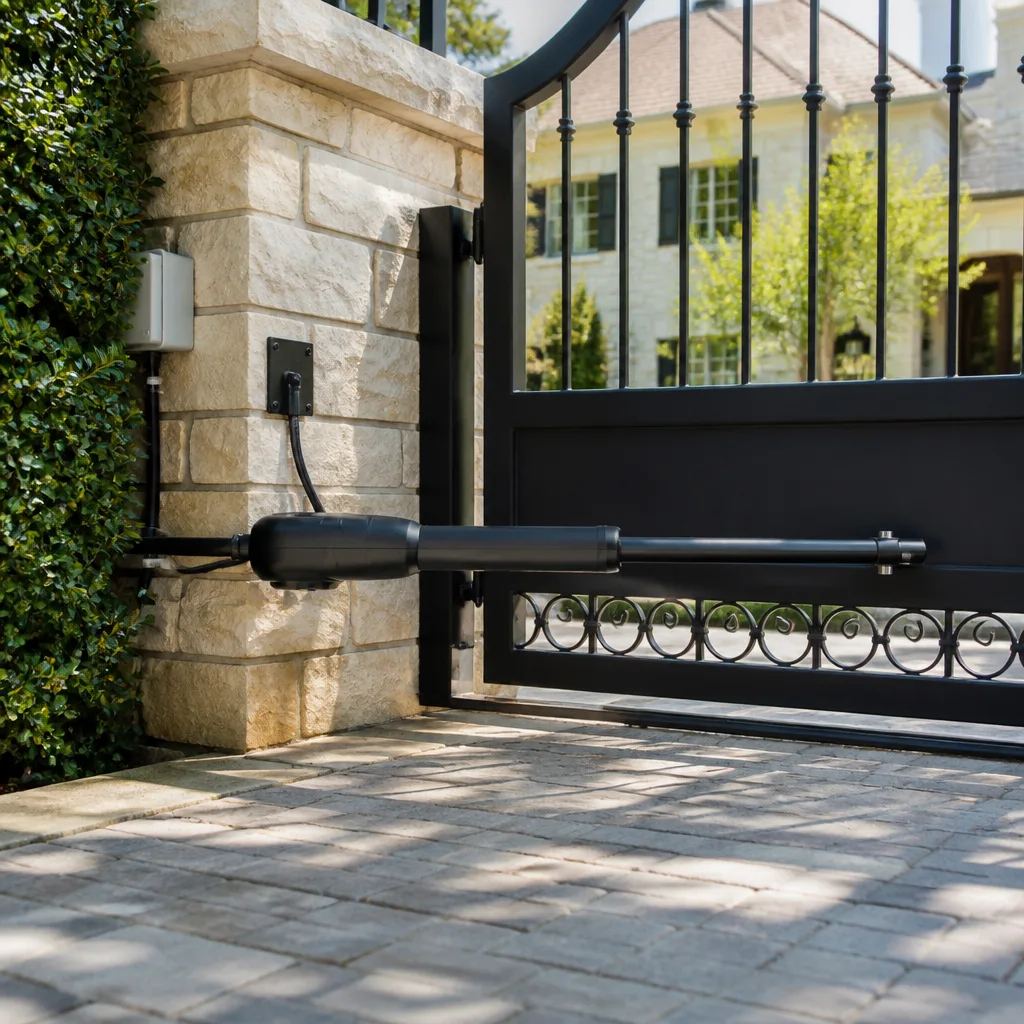
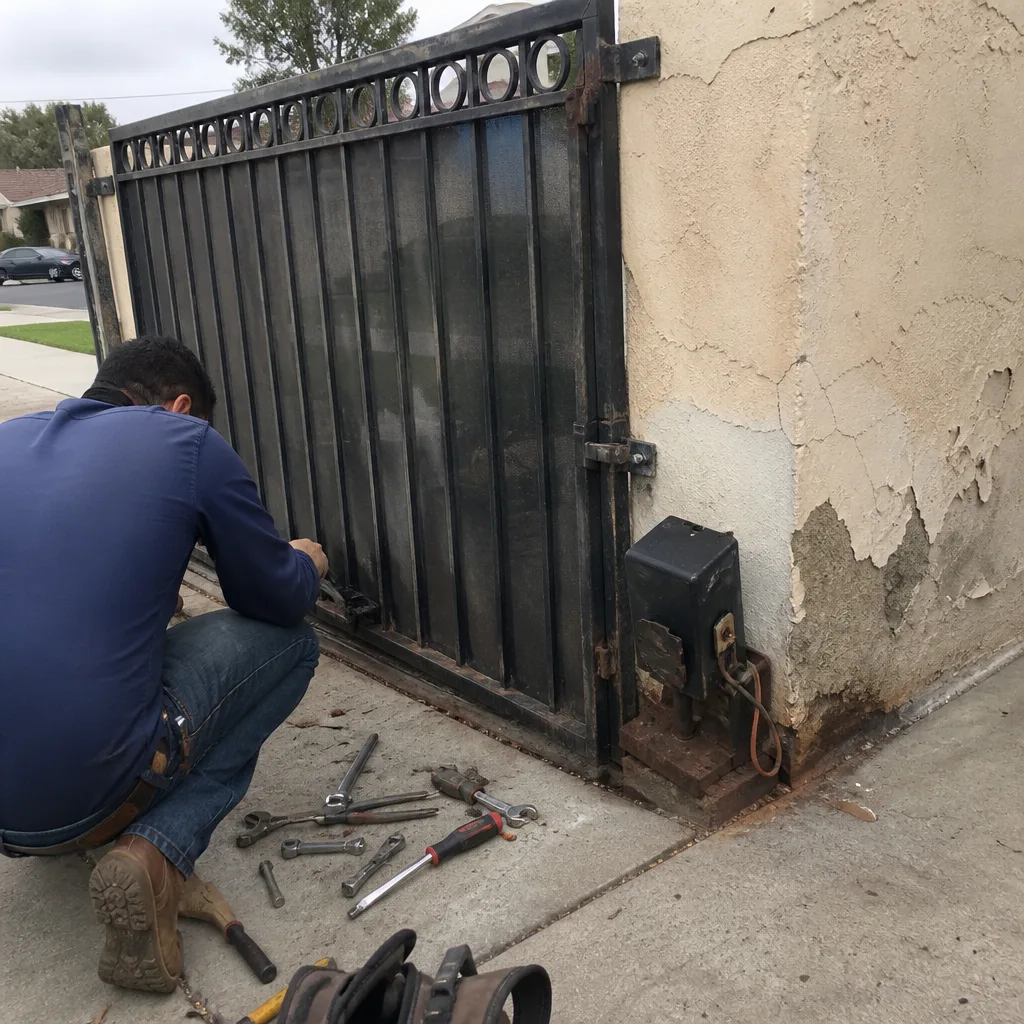 Before
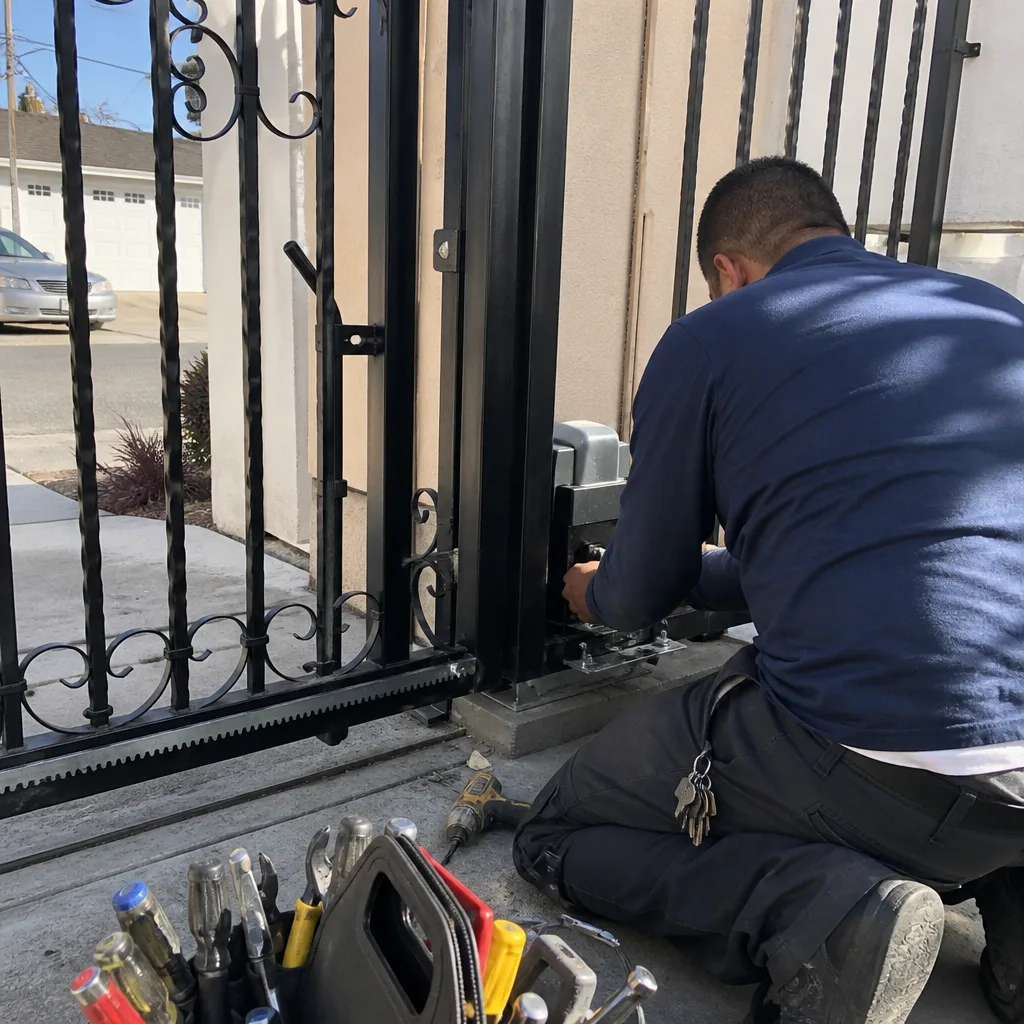 After
After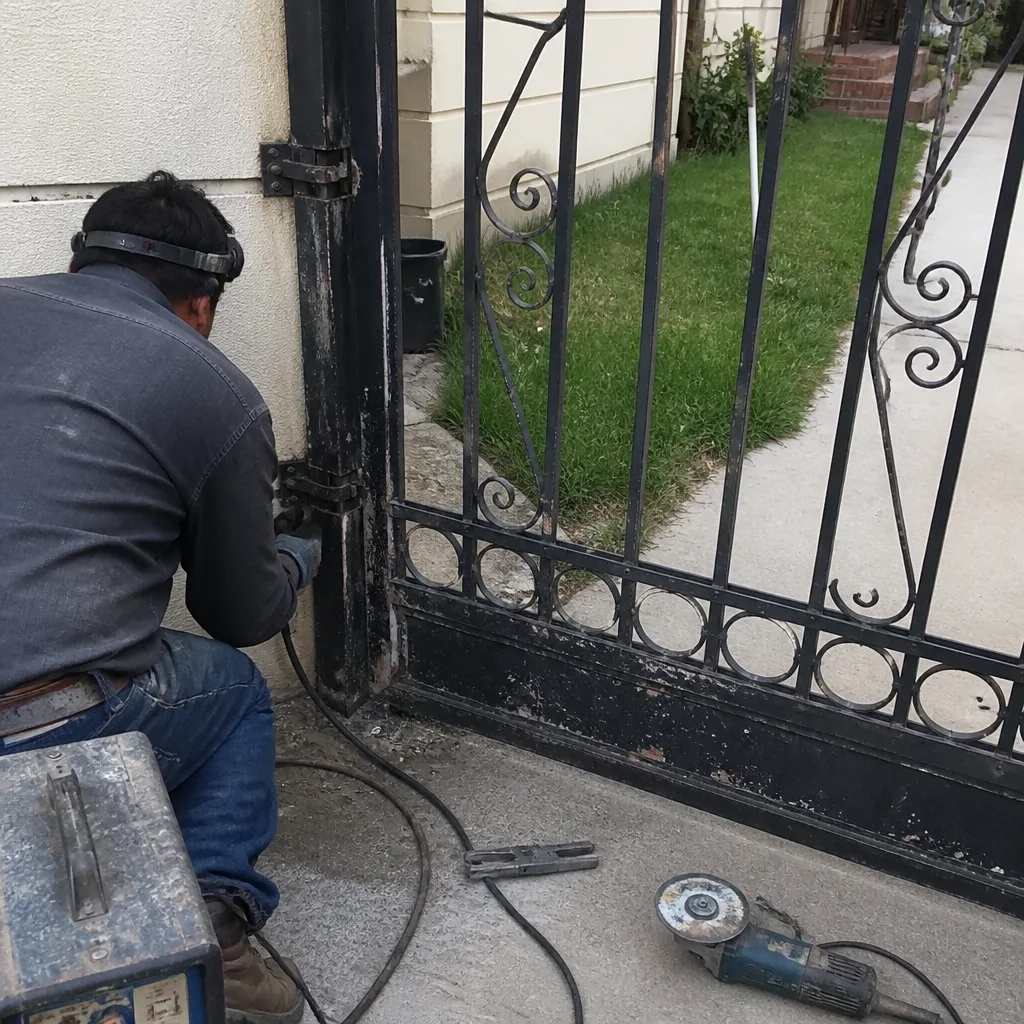 Before
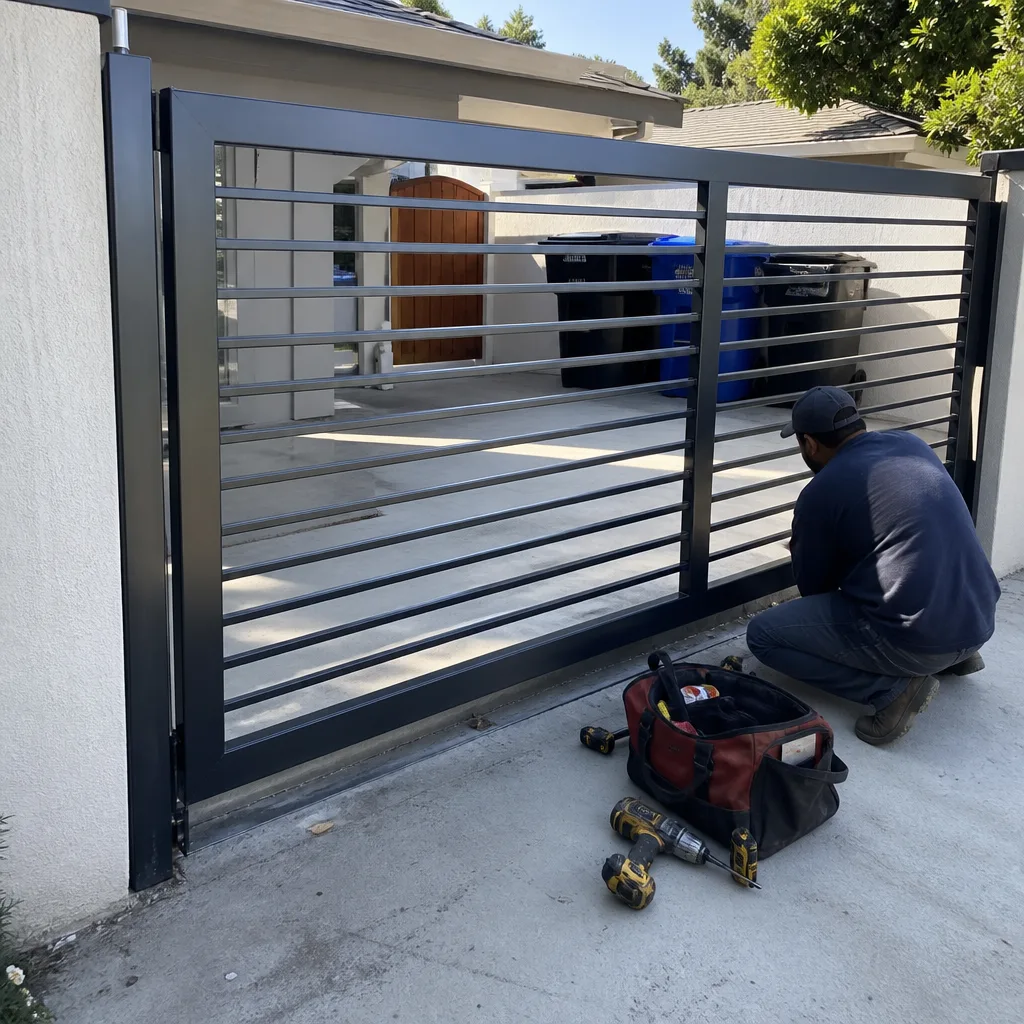 After
After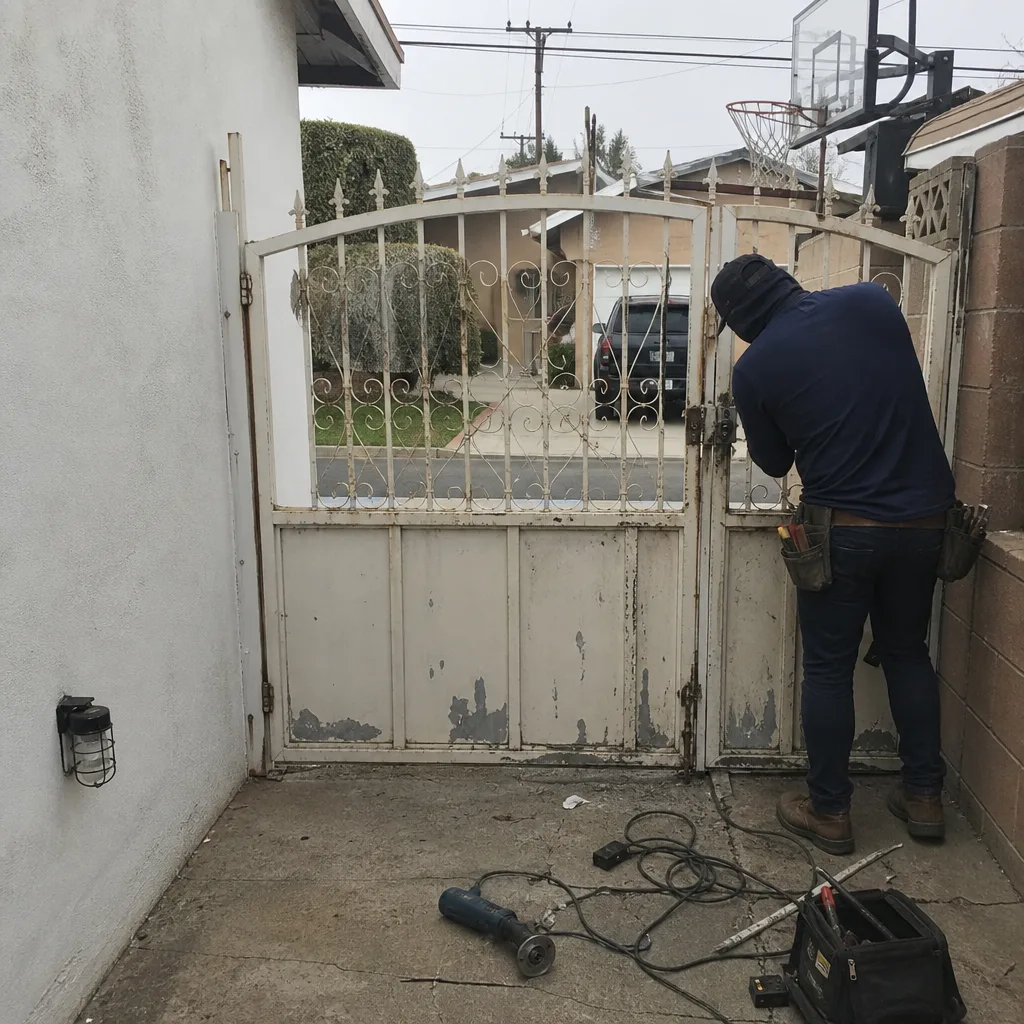 Before
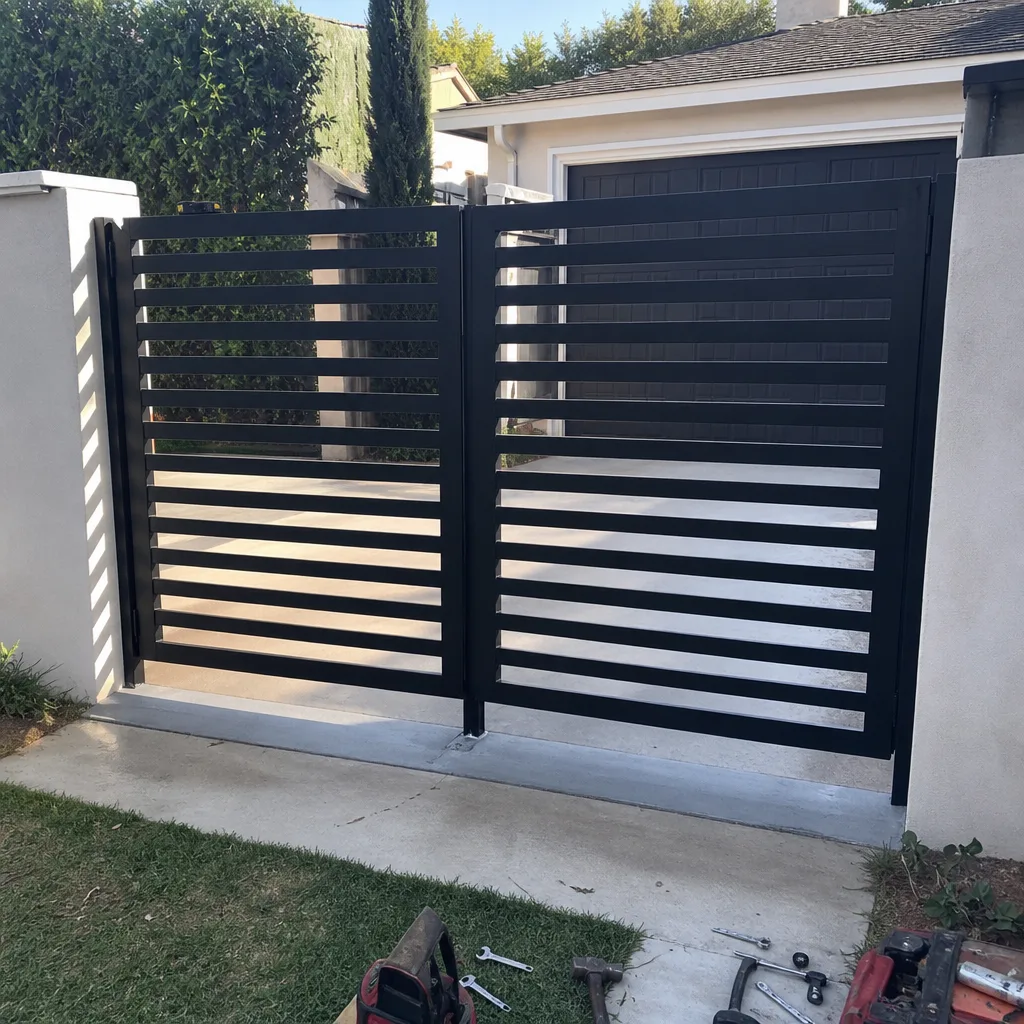 After
AfterThe Complete Guide to Gate Repair in Inglewood
Most gate failures in Inglewood aren’t random. They follow patterns. The salt air that drifts up from the coast, the clay soil that shifts under concrete posts, the way a gate settles into a yard over decades: these forces work slowly, then one morning the gate won’t open and you’re late for work. This guide explains what actually goes wrong with driveway and estate gates in Inglewood, what repairs cost, when a fix makes sense versus a full replacement, and how to find a gate contractor who will stand behind the work. No fluff. Just what we’ve learned repairing, welding, and automating gates for homeowners across Inglewood for over four decades.
Quick Answer
Gate repair in Inglewood typically costs $200 to $650 for common issues like hinge replacement, opener troubleshooting, or track realignment, while full automation overhauls can run $1,000 to $3,500 depending on the opener brand and gate weight. Most repairs take one visit and can be completed same-day by a gate-specific contractor like Ironworks Gate Co. The most important step is getting a written price before any work begins, so you’re never surprised by the bill.
Table of Contents
- Common Gate Problems in Inglewood (And What They Mean)
- How Much Does Gate Repair Cost in Inglewood?
- DIY Gate Repair vs. Hiring a Professional: What’s Safe
- Gate Automation and Opener Systems: What Goes Wrong
- How Inglewood’s Climate and Soil Affect Gate Longevity
- Gate Materials: Wrought Iron, Steel, Aluminum, and Wood
- Should You Repair or Replace Your Gate?
- How to Hire a Gate Contractor in Inglewood Without Regret
- Common Mistakes to Avoid
- When to Call a Professional
- Frequently Asked Questions
- The Bottom Line
Common Gate Problems in Inglewood (And What They Mean)
A gate is a simple machine: hinges, weight, and either a motor or a hand. When something fails, the failure usually falls into one of five categories. In Inglewood, where homes range from 1950s ranch-style properties in Morningside Park to gated estates in Ladera Heights, we see the same problems repeat across every neighborhood.
The gate sags or drags on the ground
A sagging gate means the hinge side is failing. This is the most common call we get in Inglewood, and it’s almost always a hinge problem. The original hinges were sized by a builder decades ago, and gates gain weight over time: added weld-on decorations, paint layers, or water absorbed into the frame. When a 400-pound leaf starts sitting on a hinge rated for 250 pounds, the hinge warps. The fix is replacing the hinge set, and sometimes welding in a reinforcing plate at the post. We’ve replaced hinges on gates in Inglewood that were hung in the 1970s and are still swinging clean after a proper hinge rebuild.
The opener runs but the gate barely moves
This is a drivetrain issue. Chain-drive openers stretch over time, which causes the chain to slip on the sprocket. Belt-drive units can develop slack. The gear inside the opener wears down after roughly five to eight years of daily cycles. When a LiftMaster opener hums but the gate crawls, the problem is usually the gear kit or the chain tension, both of which are common repairs on every brand we service. Quick diagnostic tip: if the opener sounds fine but moves slowly, it’s mechanical wear; if it sounds strained, it’s often a power or motor issue.
The gate slams shut or swings open uncontrolled
This is dangerous. The gate operator has a control arm, a chain, or a ram that governs the speed of movement. When that component fails, the gate becomes a heavy metal hazard. In Inglewood we see this most often on older linear actuators and hydraulic rams on estate gates. If your gate starts moving fast or free-swinging, disconnect power and call a professional the same day. A gate that slams can hurt someone or damage a car.
The keypad or intercom won’t respond
Inglewood sees its share of power surges and hot inland days that stress low-voltage wiring. Keypad failures are often simple: a dead backup battery, a corroded contact, or a short in the underground wire run to the keypad. Intercom systems on estate gates in the View Park and Inglewood Knolls areas often run analog lines that degrade over time. Before replacing a $300 keypad, a technician should test voltage at the input and at the control board. Half the keypads we’re asked to replace only need a wire splice or a $15 battery.
The gate is noisy: screeching, grinding, popping
Noise is diagnostic. Screeching means metal-on-metal contact at a pivot point without grease. Grinding means grit in a bearing or a failing ball bearing in the hinge. Popping is usually a chain skipping a tooth on a worn sprocket. In Inglewood, where fine dust and dry soil blow across driveways, hinge bearings collect grit faster than in coastal enclaves. A $89 tune-up typically quiets the gate and catches bearing wear before it becomes a $400 hinge replacement.
What a repair visit should always include
- Inspection of all physical components: hinges, bolt tightness, post plumb, and gate frame integrity.
- Test of the opener’s force settings: a gate should stop and reverse when it meets resistance. This is a safety matter, not just a convenience.
- Check of safety edges and photocells: California code requires these on automated gates. In Inglewood, aging systems often have bypassed or failed safety loops.
- Lubrication of pivot points and chain: using the correct grease. Spray lubricants wash out in a few weeks; proper lithium grease lasts a season.
- A written list of what was found, what was fixed, and what may need attention in the next year or two. You should never have to trust memory about your gate.
How Much Does Gate Repair Cost in Inglewood?
Gate repair in Inglewood runs from a $89 seasonal tune-up to a $3,500 full automation replacement. Most common repairs fall in the $200 to $650 range. Here’s what we quote on a typical day in Inglewood, based on our actual service history across the city:
| Repair | Typical Cost Range | What’s Included |
|---|---|---|
| Hinge replacement (single gate leaf) | $180 - $400 | New hinge set, shimming, alignment, weld touch-up |
| Roller / wheel replacement (sliding gates) | $150 - $350 | New rollers, track cleaning, ride height adjustment |
| Opener troubleshooting and repair | $200 - $650 | Diagnostics, chain/belt tension, limit switches, logic board (if needed) |
| Control board replacement | $350 - $900 | Compatible board for your opener brand, programming, testing |
| Keypad or intercom repair | $120 - $450 | Wiring diagnosis, battery replacement, component swap |
| Welding repair (cracked frame or pickets) | $150 - $600 | Mobile welding, grind prep, rust treatment, paint match if possible |
| Full automation system replacement | $1,000 - $3,500 | Opener, control, safety edges, remote programming |
| Seasonal tune-up | $89 | Lubrication, adjustment, safety check, inspection report |
These are honest numbers, not teaser prices. Any quote you get should be in writing before work begins. Ironworks Gate Co. settles the price up front, on every job, before a single bolt is turned. You’ll also find competitors in Inglewood quoting $49 specials, then adding “unexpected” fees once the gate is pulled apart. A square deal is an upfront price. Our standing offers: $50 off any repair over $250, a free second opinion on any written estimate, and a permanent 5% senior and veteran discount.
For exact pricing on your gate, call (747) 340-9707. Estimates are free, and a live person answers 24 hours a day.
DIY Gate Repair vs. Hiring a Professional: What’s Safe
There are jobs a patient homeowner in Inglewood can handle on a Saturday, and there are jobs nobody should handle without training. Knowing which is which saves money, keeps you safe, and keeps the gate working long-term.
Reasonably safe DIY tasks
- Lubricating hinges and rollers: a silicone or lithium spray on pivot points, done quarterly. This doesn’t fix wear but slows it.
- Cleaning the track on a sliding gate: remove dirt, pebbles, and twigs. In Inglewood’s dry season, debris builds fast.
- Replacing keypad batteries: most keypads have a 9V backup. This is a two-minute job.
- Tightening visible bolts: if a bolt head is accessible and moves, tighten it. If it’s rusted or stripped, stop and call a pro.
Never attempt these yourself
- Anything involving gate springs or torsion systems. Gate springs store enormous tension. A slip can remove fingers or break a wrist. This is a trained-professional repair, full stop.
- Releasing or re-tensioning a chain on an opener under power. You can calibrate force settings incorrectly and create a safety hazard where the gate won’t reverse when it hits a child or pet.
- Welding. Gate frames are under load. A bad weld on a cracked frame can snap without warning while the gate is in motion. We weld daily and still treat every joint as if it matters more than the last.
- Any repair on a gate that already slams or moves uncontrolled. The most dangerous gate is one in motion with a failed speed control. Call a professional the same day.
The rule we tell our Inglewood neighbors: if the repair involves tension, electricity, or structural welds, it’s a professional job. If it’s a battery or a squirt of grease, do it yourself and call if it doesn’t help.
Gate Automation and Opener Systems: What Goes Wrong
An automated gate in Inglewood has three brains working together: the physical gate, the operator (the motor and drivetrain), and the control system (keypad, remotes, safety loops, and sometimes a phone line or wireless transceiver). Most automation problems are misdiagnosed because someone fixes the symptom instead of the system.
Operator failure patterns by brand
We are certified to service nine opener brands: LiftMaster, FAAC, BFT, Linear, Viking, Ghost Controls, DoorKing, Elite, and Mighty Mule. Here’s what we see repeatedly:
- LiftMaster and DoorKing: chain stretch and sprocket wear after five or more years. These are strong openers and almost always worth rebuilding rather than replacing.
- Elite and Linear: limit switch failures. The gate moves but stops in the wrong position or reverses at the wrong time. The fix is a limit switch adjustment or replacement, often a same-day repair.
- Mighty Mule and Ghost Controls: battery and solar panel issues on units without hard-wired power. These openers are common on smaller Inglewood gates, and weak batteries cause intermittent operation that owners often misread as a motor failure.
- FAAC and BFT: hydraulic and electromechanical systems that need regular fluid level checks and valve cleaning. These are estate-grade operators, highly reliable when maintained, expensive to replace if neglected.
- Viking: control board sensitivity to power surges. In Inglewood, voltage spikes are common in summer, and Viking boards sometimes need a surge protector added to the power feed.
Safety systems are required by California law
Automated gates in Inglewood must have functioning safety devices. The two standard types are photocells (an invisible beam that stops the gate when broken) and safety edges (pressure-sensitive strips on the gate’s leading edge that reverse it on contact). Older gates from the 1980s and 1990s frequently lack these, and homeowners sometimes disable them because they false-trigger. That’s a code violation and a real liability. We never bypass a safety device to make a gate “work.” We repair it.
When automation repair costs more than replacement
Ask these three questions before paying for a board or motor repair:
- Is the opener over 15 years old? Parts become scarce and expensive after two decades. A new opener is often cheaper than an obsolete board.
- Has the control board failed twice in a year? Recurring board failure means another component is cooking it. Fix the root cause or replace the system.
- Does the gate still need mechanical work too? If the gate itself sags and the opener is dead, replacing the opener without fixing the gate is throwing money into a bad machine. Fix the gate, then automate it.
Ironworks Gate Co. templates its estimates either way: if repair makes sense, we repair. If replacement is cheaper over the next five years, we say so in writing. The Ironworks Gate Co. home page has more about the brands we carry and our service area.
How Inglewood’s Climate and Soil Affect Gate Longevity
Inglewood sits about three miles from the Pacific, close enough for marine air, far enough inland for real summer heat. That combination accelerates the slow death of every metal gate in ways a homeowner might not notice until a hinge snaps.
First: the marine layer. Morning fog rolls in from the coast and leaves a film of moisture on gate surfaces. Iron and steel gates develop surface rust where paint has chipped or thinned. The fix is prevention: a quality enamel or powder-coat finish, touched up every few years at the first sign of rust bloom. Aluminum gates resist corrosion better, but they fatigue differently and cost more up front.
Second: the clay soil. Inglewood is built on expansive clay that swells in wet winters and shrinks in dry summers. Gate posts set in concrete can shift by a half-inch over a decade. A half-inch doesn’t sound like much, but at the latch side of a 12-foot gate, a half-inch at the post becomes a gate that doesn’t latch cleanly, a striker that misses, and an opener that strains every cycle. In neighborhoods like Morningside Park, where homes sit on deeper clay, we see post movement more often than in the sandy soils closer to the South Bay.
Third: dust. Dry-season wind carries fine dust that packs into bearings, chains, and rollers. It mixes with grease to form an abrasive paste that wears metal twice as fast. The solution is a seasonal tune-up, every six to twelve months, where old grease is cleaned out and replaced before it becomes sandpaper.
The practical takeaway for an Inglewood homeowner: a gate that gets basic care twice a year lasts two to three times longer than an ignored gate. An $89 tune-up pays for itself in skipped major repairs.
Gate Materials: Wrought Iron, Steel, Aluminum, and Wood
Most gates in Inglewood fall into one of four material categories. Each one fails differently, and the repair approach changes with the material. Knowing what you have helps you ask the right questions.
Wrought iron (or “wrought-look” steel)
True wrought iron is rare; most “iron” gates sold since the 1980s are actually milled steel with a black powder-coat finish to look like classic iron. Steel is strong and repairable by welding. Pickets can be cut out and replaced. Cracked frames can be welded and re-finished. The weak point is rust, which starts at every scratched coating and spreads under the paint. A good repair includes grinding rust back, treating the steel, and matching paint. In Inglewood, gates in the Fairview Heights and Arbor Village neighborhoods tend to be older steel units that benefit from regular rust inspection.
Aluminum
Aluminum gates don’t rust, which makes them popular near the coast. But aluminum is softer than steel, so hinges bolt into the frame with reinforcing plates, and those plates work loose over time. Aluminum also can’t be welded as easily in the field; most repairs involve mechanical fasteners, replacement extrusions, or shop welding. If your aluminum gate sags, the fix is usually reinforcing the hinge rail or upgrading the hinge plates, not simply tightening screws.
Wood
Wood gates are more common on pedestrian walk-through gates than driveway gates in Inglewood, but they still exist on older properties. Wood rots at the bottom rail and around hinge bolts. In Inglewood’s damp winters, rot accelerates. The repair is typically cutting out the rotted rail and splicing in a new section, or replacing the gate entirely if the frame is more than 30% compromised. Wood gates on automated systems also need special attention: the opener’s force settings must be re-checked seasonally as the wood swells and shrinks.
Combination gates
Many Inglewood estate gates combine a steel frame with aluminum panels or wood infill. These mixed-material gates hide their failures: water gets between the materials at the joints, and the differing expansion rates loosen fasteners. Repairing these properly means understanding how the materials interact, not just tightening bolts.
Should You Repair or Replace Your Gate?
Gate replacement in Inglewood starts around $2,500 for a basic single-leaf steel driveway gate, installed, and climbs from there for custom estate work with automation. That’s a real investment, and sometimes it’s the right one. Here’s the honest decision framework we use with every Inglewood homeowner.
Repair makes sense when…
- The gate frame and posts are solid, and the failure is a hinge, roller, opener component, or control board.
- The gate is custom or ornamental work you can’t replace at retail. Older artisan gates in Inglewood are often worth far more to repair than to replace.
- The cost of the repair is under half the cost of a comparable replacement.
- You like the gate and it fits the house. A 40-year-old gate that’s been maintained can close like the day it was hung.
Replacement makes sense when…
- The frame is rusted through in more than one place, or previous welds have failed.
- The gate has been repaired three or more times in two years.
- The automation is obsolete and the gate itself is marginal, making a full package upgrade smarter than piecemeal fixes.
- The gate no longer serves your needs: you need a taller privacy gate, a wider opening for a new vehicle, or a pedestrian pass gate.
In Inglewood, we find that about 70% of the gates we’re called out for are repairable. The other 30% need replacement, and those owners usually save money by replacing the whole system at once rather than paying for a repair now and a replacement in eight months.
How to Hire a Gate Contractor in Inglewood Without Regret
The garage-door-style scam has come to gates: a cheap quote, a truck that shows up late, a repair that lasts six weeks, and a phone number that no longer answers. Inglewood homeowners who have lived in their homes for twenty years or more have usually been burned at least once. Here’s what to look for, specifically in a gate contractor.
The non-negotiables
- A live person answers the phone. When your gate fails at 7 a.m. and you can’t get your car out, you don’t want a voicemail tree. At Ironworks Gate Co., a live person answers calls 24 hours a day, 7 days a week. Never an answering service, never a callback queue.
- The price is settled before work begins. A written, upfront price. Not an estimate that balloons. You should never learn what the “real” cost is after the gate is disassembled.
- The warranty is written. A verbal “we’ll take care of you” is worthless. Our 90-Day Done Right Promise is a written guarantee on every job. If it’s not right, we come back and make it right. No paperwork, no arguing.
- The technician is trained for your specific opener brand. Nine opener brands dominate the Inglewood market: LiftMaster, FAAC, BFT, Linear, Viking, Ghost Controls, DoorKing, Elite, and Mighty Mule. Ask if the contractor is certified for your brand before he opens the control box.
- The company is local and plans to stay local. A one-truck outfit might be gone in two years. Ironworks Gate Co. has served Inglewood for over 42 years and owns a stake in the community. We’ll be here when the warranty matters.
Red flags
- A quote far below market. If hinge replacement is quoted at $59 when the part alone costs that much, something else is being added later.
- No physical address or local phone number on the estimate.
- Pressure to decide before the technician leaves. A legitimate company will let you think it over.
- A technician who won’t explain what he’s doing. You should understand your gate as well as he does.
Common Mistakes to Avoid
- Ignoring a noisy gate. Noise is the gate’s early warning system. A screech that costs $89 to fix this month becomes a $400 hinge replacement next year. In Inglewood’s dry climate, grit makes that timeline even shorter.
- Greasing a problem instead of fixing it. If a hinge is worn, lubrication only masks the wear for a few weeks. The real fix is a new hinge or bushing. Constant lubrication on a damaged pivot is like tightening a broken spoke.
- Bypassing safety edges or photocells to stop false triggering. That false trigger is a signal that a safety loop wire is cracked or a photocell is misaligned. Fix it. Bypassing a safety device is illegal and dangerous, and if someone gets hurt, the liability is yours.
- Using any grease that’s on the shelf. Spray lubricants wash out in weeks. The correct product for gate hinges and chains is a lithium-based grease. Wrong grease attracts more grit in Inglewood’s dusty season and wears components faster.
- Buying a new opener before checking the power supply. More than once, we’ve arrived to install a new opener a homeowner already purchased, only to find the old opener failed because of a corroded underground wire or a dead outlet. The opener was fine. A $150 wire repair would have saved $700.
- Hiring a general handyman for welded repairs. Gate welding is a specific skill. A structural weld on a 400-pound gate leaf is not the same as welding a railing or a furniture leg. In Inglewood, we’ve rebuilt gates that were “welded” by a handyman and failed within months. Get a gate specialist.
- Skipping the seasonal tune-up. The $89 tune-up is the cheapest insurance a gate owner can buy. It catches post shifting, bearing wear, and opener calibration before they become costly failures. In Inglewood’s climate, twice a year is right for most gates.
When to Call a Professional
A gate that sits on its brackets without complaint doesn’t need a technician. A gate that sags, slams, grinds, fails to latch, or opens on its own absolutely does. Call a professional when: the gate makes a new sound and keeps making it; the opener struggles or runs long; the gate doesn’t close flush; the keypad works intermittently; or any safety device stops functioning. A gate is a heavy machine, and when it fails, it fails in ways that hurt people and vehicles. If you’re anywhere near a doubt about your gate in Inglewood, call Ironworks Gate Co. at (747) 340-9707. Estimates are free, and a live person answers around the clock.
Frequently Asked Questions
Gate repair in Inglewood typically costs between $200 and $650 for common repairs like hinge replacement, opener diagnostics, or track realignment. Full automation replacement runs $1,000 to $3,500. Ironworks Gate Co. provides upfront written pricing before any work starts, so the number you agree to is the number you pay. Call (747) 340-9707 for a free estimate.
Yes. Most gate repairs in Inglewood are completed same-day in a single visit. A live person answers the phone 24 hours a day at (747) 340-9707, and we dispatch technicians across Inglewood every day including weekends. If it’s urgent, say so on the call and we’ll get someone out.
A full gate installation in Inglewood includes removal of the old gate, new gate build and hang (or installation of a prefabricated gate), hinge and post work, opener installation and programming if automation is included, safety system installation, and cleanup. You get a written quote covering all of it before work begins. No surprises, no add-on fees after the fact.
Yes. Ironworks Gate Co. handles low-voltage power runs, safety edge installation, photocells, keypads, and full opener wiring. California code requires safety edges or photocells on automated gates, and we install and test them on every automation job in Inglewood. Call (747) 340-9707 to schedule an assessment.
A quality gate opener in Inglewood lasts 10 to 15 years with seasonal maintenance, though high-use gates may need a rebuild earlier. Chain-drive LiftMaster and DoorKing units commonly exceed a decade when serviced. Small solar-powered units like Mighty Mule or Ghost Controls sometimes last shorter if batteries deep-cycle too often. The single biggest factor is maintenance: openers that are checked and adjusted twice a year outlast ignored ones by years.
We’re certified on nine gate-automation brands: LiftMaster, FAAC, BFT, Linear, Viking, Ghost Controls, DoorKing, Elite, and Mighty Mule. That covers virtually every opener on an Inglewood driveway. If your opener isn’t on that list, call anyway: our technicians can assess most brands on site, and we’ll tell you honestly if replacement makes more sense than repair. Estimates are free.
The Bottom Line
A gate is one of the few machines on your property that moves several hundred pounds by motor every single day. It needs care like the car in your garage, and when it breaks, it needs a specialist, not a guesser. In Inglewood, where the marine air, clay soil, and dry dust work against every hinge and roller, a repaired gate done right will outlast a repaired gate done cheap by a wide margin. Know what’s wrong, ask for a written price, and demand a written warranty. That’s the whole game. Ironworks Gate Co. has served Inglewood for over 42 years and plans to be here for another forty. The company that makes a 40-year-old gate close like the day it was hung is the company you want on the other end of the phone.
Call (747) 340-9707 for a free estimate. A live person answers, day or night.
Written by Victor Salinas, Owner at Ironworks Gate Co., serving Inglewood since 2013.